Researchers from Boston University have created a first of its kind framework for understanding and classifying pneumonia — a common, potentially severe respiratory disease that is the leading cause of death due to infection in the United States. Their study analyzed specific structural changes and cellular damage in human lungs, revealing seven distinct subphenotypes.

This new insight, which is detailed in the paper, “Subphenotypes of Pneumonia Defined by Pulmonary Histopathological Features,” published in the American Journal of Respiratory and Critical Care Medicine, could help develop personalized patient treatments.
Historically, the medical field has categorized pneumonia based on patient symptoms, imaging tests and microbiological cultures. Now, researchers have examined the pulmonary histopathology of the disease to distinguish pneumonia heterogeneity and construct a framework for improved diagnosis and treatment.
“While pneumonia is a pulmonary pathophysiology, pneumonia patients have not been subphenotyped based on biological processes within the lungs. Focusing on the lungs, where the pneumonia process is occurring, we were hoping to determine whether distinct subphenotypes of pneumonia would emerge based on variations in local inflammation and damage revealed by pulmonary histopathology,” said corresponding author Joseph P. Mizgerd, ScD, in a university news release. Dr. Mizgerd is the Jerome S. Brody, MD, Professor of Pulmonary Medicine and director of the Pulmonary Center at the Boston University Chobanian & Avedisian School of Medicine.
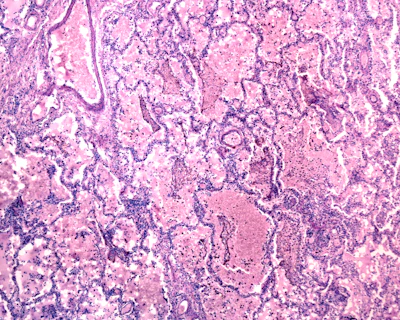
The researchers examined the lungs of 276 patients who died with pneumonia, scoring each lung for 20 different types of histopathology. They employed machine learning algorithms to group the subjects into seven subphenotypes. Each group had different patterns of lung abnormalities that were associated with unique microbes and immune cells.

The team compared the groupings with lung samples from mouse models and noted some correlating histological features. This observation could help scientists distinguish the various pneumonia pathologies to develop new tools and therapies to prevent and treat the disease, the authors noted.
“Creating a better understanding of the multiple distinct biological processes that damage the lungs during pneumonia will guide innovative approaches to treating and possibly preventing pneumonia,” Dr. Mizgerd said.
Subsequent research will include identifying biomarkers that signal the subphenotypes, defining the driving mechanisms of each and exploring targeted therapies for the varying subgroups that would supplement existing microbe-directed therapies.