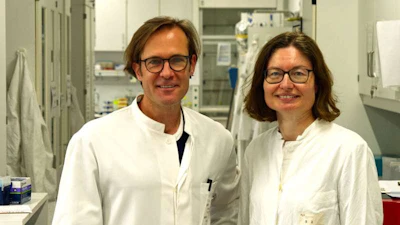
Researchers from TWINCORE have uncovered how respiratory syncytial virus (RSV) alters the genetic program of respiratory cells, thereby suppressing the immune response and disrupting cell function. Their findings are detailed in the paper, “Respiratory Syncytial Viral Load Drives Ciliated Cell Dedifferentiation and Suppresses Antiviral Immunity,” published in Science Advances.

According to the World Health Organization, approximately 3.6 million children require hospitalization from RSV every year. The infection is fatal for about 100,000 of them.
“How the virus causes damage in the epithelial cells of the respiratory tract and why the immune response does not keep it better in check has been unclear until now,” said lead author and professor Thomas Pietschmann, PhD, in a press release.
Dr. Pietschmann is director of the Institute for Experimental Virology at TWINCORE in Hannover, Germany. TWINCORE, which was founded in 2008 by the Helmholtz Centre for Infection Research and the Hannover Medical School, collaborated with the Center for Experimental and Clinical Infection Research and colleagues at surrounding institutions.
To understand the phenomenon, the scientists used a special cell culture model in which they cultivated respiratory cells from human donors and infected the tissue with RSV. Then they used RNA sequencing to analyze the gene activity in each cell.
“Our data show that only a fraction of the infected cells even realize they have been infected,” said Sibylle Haid, PhD, a researcher in the Pietschmann Lab, and Kevin Berg, PhD, first author of the study. “This is probably because only some lung cells produce sufficient quantities of virus detectors and thus generate messenger molecules quickly enough to protect themselves and neighboring cells.”

When there are not enough sensor molecules, the researchers explained, the virus spreads and overpowers the protective mechanism.
Interferon, a key messenger substance in the immune system, can act as an antivirus by activating interferon-stimulated genes — but the researchers found even it could not eradicate RSV once it takes over. They did discover, however, that artificially activating the antiviral transcription factor IRF1 did suppress RSV in their model.
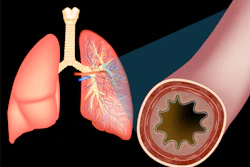
The group also discovered a possible explanation for how RSV causes so much cell damage. Within the infected epithelial cells, they said, the virus inhibits the genes responsible for forming cilia.
“In this study, we were able to gain important insights into the pathology of RSV infection at the cellular level and also identify IRF1 as a potentially promising candidate for pharmaceutical intervention,” Dr. Pietschmann said.