The discovery of a 14-protein blood signature associated with increased lung cancer risk could diagnose individuals up to five years earlier and treat them with preventive medicine, like anti-interleukin (IL)-1b blockers, to significantly reduce their risk.

Researchers at the Francis Crick Institute and University of College London (UCL) in England completed the study, which was funded by Cancer Research U.K. and the European Research Council (ERC). The paper, “Plasma Signals of Lung Tumor Promotion for Molecular Cancer Prevention,” was published in Cell.
The team’s previous research validated that air pollution heightens cancer risk by causing inflammation and activating dormant mutated cells. In the new study, the researchers’ goal was to identify a signature associated with pulmonary inflammation that would help them better predict lung cancer, beyond screening for age and smoking history.
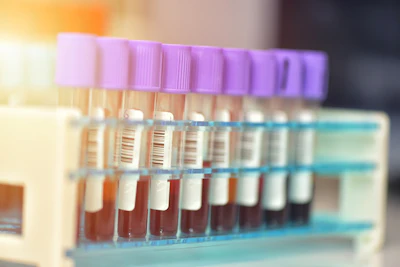
Researchers analyzed data from more than 48,000 U.K. Biobank patients, matching their blood plasma proteins with cancer registry records to distinguish those who were later diagnosed with lung cancer. Using machine learning algorithms, the researchers found 14 key proteins that were present in those who developed lung cancer, even in patients who were nonsmokers. The team validated its results in eight global datasets.
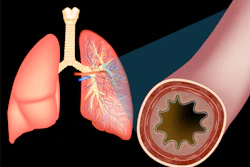
According to the study, the signature does not come from the cancerous tumor but rather the precancerous inflammatory environment. Researchers confirmed that some of the signature’s components increased as a result of IL-1b, which is associated with air pollution. This activity, authors noted, creates a surge of KAC cells that can become cancerous when crossed with epidermal growth factor receptor (EGFR) mutations.

Researchers noted that some individuals with the signature also received a later diagnosis of COPD or idiopathic pulmonary fibrosis (IPF), suggesting the impacted inflammatory state could be similar across multiple respiratory diseases.
“Finding a signal for an inflammatory state in the lungs has given us insight into this window of opportunity when preventive treatment could work best,” said lead investigator Charles Swanton, FRCP, BSc, PhD, clinical research director and principal group leader at the Crick and professor in cancer at UCL.
“This work supports a relatively new idea in the field that some common age-related diseases, causing a high burden of disease in the community, share a common, presymptomatic state of inflammation,” Dr. Swanton said. “We think the signature could in the future help to predict and help prevent lung cancer and other lung diseases.”
Building on the study’s initial results, the lab team re-analyzed data from 4,651 individuals who participated in the CANTOS trial, in which investigators tested canakinumab (an IL-1b blocker) in preventing cardiovascular disease. Researchers observed that patients who had the high baseline 14-protein signature also profited from canakinumab, reducing their risk by almost 50%.
“It’s a proof of concept that, one day, we could use this signature to offer preventive treatment to people at risk of lung cancer,” said Tej Pandya in an ERC news release. Pandya is a clinical PhD student at UCL and a visiting scientist at the Francis Crick Institute.