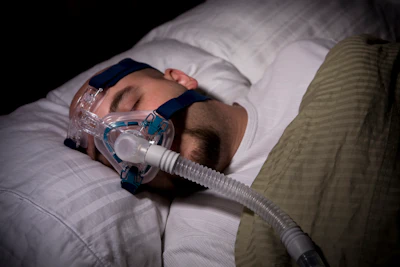
A recent European clinical trial evaluated the drug sultiame for the treatment of moderate to severe sleep apnea. Its results, which were published in The Lancet, noted significantly reduced interruptions in sleep (up to 47%) as well as improved oxygen levels and regulated breathing signals in the brain.

Obstructive sleep apnea (OSA) is a common condition but lacks an approved pharmacologic treatment. This pill-based alternative to CPAP could help people breathe easier at night and improve their quality of sleep, the authors said in their paper, “Sultiame Once per Day in Obstructive Sleep Apnea (Flow): A Multicenter, Randomized, Double-Blind, Placebo-Controlled, Dose-Finding, Phase 2 Trial.”
The study assessed 298 adults (aged 18-75 years) across five European countries. The participants had untreated moderate to severe OSA and an Apnea-Hypopnea Index (AHI) of between 15 to 50 events per hour. They were evenly split into four groups: tablets of sultiame 100 mg, sultiame 200 mg, sultiame 300 mg, or placebo.
The study met its primary endpoint for efficacy, which was relative change in AHI3a from baseline to treatment end (15 weeks). The placebo-subtracted relative AHI3a adjusted means was -16.4% for sultiame 100 mg, -30.2% for sultiame 200 mg and 34.6% for sultiame 300 mg.
“Sultiame caused consistent, dose-dependent improvements of OSA, nocturnal hypoxia, sleep quality and excessive daytime sleepiness,” the authors wrote.
Researchers from the University of Gothenburg, who led the study, said sultiame works by stabilizing breath control and increasing respiratory function, which in turn lowers the risk of airway collapse — the main cause of OSA. Side effects were reported to be mild and temporary.

The authors said further investigation is needed to validate sultiame for use in patients with OSA. Currently, the drug is approved to treat a type of childhood epilepsy.