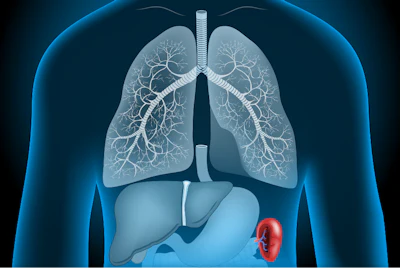
A research team from the Chinese Academy of Medical Sciences, led by professor Xuetao Cao, MD, have discovered a dynamic spleen-to-lung neutrophil axis that activates antiviral defense. This is the first study to identify the spleen as the origin of lung neutrophils caused by pulmonary inflammation during respiratory infections. It also disproves alternate opinions that lung neutrophils were exclusively derived from local sources as opposed to a coordinated inter-organ network.

The paper, “Single-Cell Spatiotemporal Mapping Reveals a Spleen-To-Lung Neutrophil Axis in Antiviral Defense,” was published in the journal, Immunity & Inflammation.
Using a golden hamster model of SARS-CoV-2 infection, the researchers applied single-cell RNA velocity analysis with spatial transcriptomic deconvolution to track neutrophil dynamics. They uncovered neutrophils that originated in the spleen traveled to the lungs at the peak of antiviral response. This proves the spleen is an active participant in innate immune defense.
When researchers observed the lung tissue at day seven post-infection, there was a unidirectional variation trajectory within the neutrophil area, going from fertile subgroups and progressing through immature and mature states to fully activated cells.
“These results indicated that after viral infection, macrophages/monocytes and neutrophils exhibited distinct proliferation-differentiation patterns,” the authors wrote. “Macrophages showed a simultaneous activation and proliferation cycle, whereas the proliferation of neutrophils was separated from activation, potentially originating from other organs.”
At days five to seven post-infection, the researchers noted the neutrophil levels in the spleen increased significantly. The reproduction of neutrophils in the spleen corresponded with the substantial infiltration of neutrophils into the lungs.

 Integrating single-cell RNA velocity, transcriptomic profiling and spatial deconvolution were used to demonstrate that the massive neutrophil infiltration in the lung during SARS-CoV-2 infection was primarily originated from the spleen, and spleen served as an important organ for neutrophil proliferation during pulmonary viral infection.Professor Xuetao Cao from Chinese Academy of Medical Sciences, Beijing 100005, China; DOI: 10.1007/s44466-026-00030-8
Further, the researchers said the study offers a new understanding of immune coordination between organs and sheds light on potential diagnostic and therapeutic targets for pulmonary infectious diseases. For example, in people who have inflammatory lung conditions fueled by dysregulated or extreme neutrophil responses, such as severe viral pneumonia, treatments that target the spleen-to-lung neutrophil axis could help regulate immune cell proliferation and activity.