A recent study published in Frontiers in Microbiology revealed that while iron-rich conditions help support pulmonary persistence, they also — opposingly — decrease virulence and promote tissue damage. According to the authors, the study underscores an important paradox that could explain why lung infections caused by the bacteria Pseudomonas aeruginosa can become severe and hard to eradicate.

This and other findings of the study were detailed in the paper, “Iron Dictates the Growth, Biofilm Formation and Virulence of Pseudomonas aeruginosa in Pulmonary Infections.”
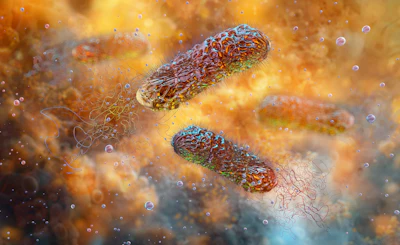
P. aeruginosa is a resourceful bacterium that can infiltrate numerous body systems; however, lung infections that become persistent are increasingly difficult to treat due to the pathogen’s ability to form biofilms. These biofilms form a protective cellular matrix that adheres to surfaces and can resist treatment, making chronic lung infections particularly stubborn.
Further, P. aeruginosa employs a complex assortment of virulence factors to promote and prolong infection, including toxic compounds, tissue-degrading enzymes and siderophores — molecules that bind iron to support growth and survival. The amount of iron available in a local environment significantly alters the extent of bacterial growth and virulence, the researchers said.
Although human bodies naturally maintain overall iron, certain pulmonary conditions can expose bacterium to variable iron levels that impact pathogenicity. There has been little research using both in vitro and in vivo models to investigate the role of iron in influencing the behavior of P. aeruginosa in chronic lung infections.
In the study, researchers examined how changing iron concentrations influence P. aeruginosa growth, biofilm formation and virulence. They used laboratory models that mimicked iron-replete and iron-restricted conditions applicable to pulmonary infection. Both the clinical bacteria and reference strain (PAO1) were tested under the varying conditions.

To create iron-deficient conditions, the researchers applied tryptic soy broth (TSB) with zero to 500 mm dipyridyl (DP), an iron chelator. They found that as DP increased, PAO1 growth progressively slowed. Ultimately, they selected TSB with 400 mm DP as the optimal iron-deficient condition.
The researchers observed that within the iron-replete environments, compared to the iron-restricted or partially iron-restored environments, all strains of P. aeruginosa:
- Grew at an optimal rate
- Significantly increased biofilm formation
- Significantly decreased virulence
In mouse models, those infected with cultured bacteria in an iron-replete environment demonstrated minimal granulocyte infiltration of alveolar walls and slightly irregular bronchiolar epithelium. The mice that were infected with bacteria grown in an iron-restricted environment demonstrated more abnormal results, such as alveolar narrowing or collapse, increased immune cell penetration, bronchiolar irregularities, perivascular edema, irregular hemorrhaging and interstitial vascular congestion.

Ultimately, researchers said the study suggests that iron-rich conditions support healthy growth with reduced pathogenicity, whereas iron-restricted conditions drive P. aeruginosa into a more aggressive, infectious state. Therefore, based on these findings, the authors said physicians should be cautious of treatments approaches aimed solely at iron deprivation, as they can inadvertently aggravate lung inflammation and damage and cause chronic infection.