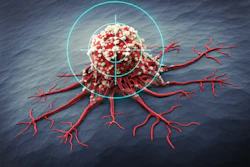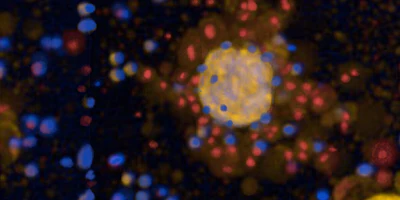
Researchers at the Berlin Institute of Health at Charité (BIH) in Germany have developed a method to evaluate lung cancer therapies using patient-derived “tumoroids,” or miniature tumors cultivated from lung tissue removed during surgery. They published their paper, “Lung Tumouroids as a Testing Platform for Precision CAR T Cell Therapy,” in Nature Biomedical Engineering.

Despite numerous therapeutic routes for lung cancer, including surgery, radiation, chemotherapy and immunotherapy, treatments frequently fall short. But the exact outcome remains unknown until after treatment. The research team from the BIH Center for Regenerative Therapies wanted a way to assess and compare therapeutic success. This depends on the tumor’s biological diversity and its strategies for evading treatment as much as it does a patient’s cancer stage and overall condition, they said.
According to a press release, the lab-grown tumoroids crucially preserve the original tumor’s genetic, cellular and protein-level characteristics, mirroring how a patient’s tumor behaves. This allows researchers to test multiple therapies on them, observe responses and determine which approaches are most likely to succeed. They believe the tumoroid-based testing method could become a powerful tool for tailoring treatments to individual patients and improving outcomes.
“Our study shows that we can use patient-derived tumoroids to both validate standard therapies and realistically test new CAR-T cell approaches. This is an important step toward truly personalized treatment for lung cancer patients,” said co-lead author Lukas Ehlen, MD, a researcher in the BIH’s Experimental Immunotherapy Group and a physician in the Charité’s department of anesthesiology and intensive care medicine.

First, the research group confirmed that the tumoroids’ response to standard chemotherapy was the same as real tumors. Then, they used the tumoroids to test CAR-T cells — a form of immunotherapy in which a patient’s T cells are inherently modified to transport chimeric antigen receptors (CARs) that recognize and kill cancer cells. CAR-T therapy has proven effective in treating some blood cancers but has been less successful in treating solid tumors like those predominately found in lung cancer patients.
In their experiments, the researchers discovered that the profusion of target molecules on tumor cells is not the only thing that determines the success of CAR-T therapy. A tumor’s defensive and immune-escape strategies also play large roles.
“We were struck by how strongly a tumor’s own protective mechanisms determine whether CAR-T cells can destroy the tumoroids,” said Martí Farrera Sal, PhD, co-lead author and a postdoc researcher in the BIH’s Experimental Immunotherapy Group.
“With our improved protocol, we can cultivate and characterize patient-specific lung tumoroids within three months of surgery,” said Michael Schmück-Heneresse, PhD, head of the BIH’s Experimental Immunotherapy Group. “The model opens up new clinical applications, such as a testing platform for experimental therapies — especially for patients who have not responded to standard treatments. This represents a significant step toward improving CAR-T cell therapies for solid tumors and advancing personalized oncology.”