Researchers from the Medical University of Vienna have discovered a new approach to treating a common but difficult-to-treat form of lung cancer. The study shows that a combination of two well-studied classes of drugs — ERBB inhibitors and Aurora kinase inhibitors — is significantly more effective against KRAS-mutated lung adenocarcinomas than current therapies.

The paper, “KRAS-Mutated Lung Adenocarcinoma Responds to Pan-ERBB and Aurora Kinase Inhibitors,” was published in the journal, npj Precision Oncology. According to its authors, the research establishes a promising outlook for patients who have limited available treatment options.
KRAS mutations occur in approximately one third of all lung adenocarcinomas. Although targeted drugs like sotorasib (a KRAS-G12C inhibitor) exist, treatment success is often temporary. Many tumors develop resistance within a few months of therapy by activating alternative signaling pathways.
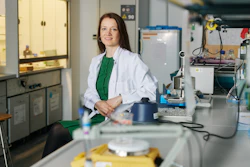
This idiosyncrasy prompted the research team, led by Iris Uras Jodl, PhD, of the Center for Physiology and Pharmacology at MedUni Vienna, to examine other therapeutic perspectives.
“Although KRAS-mutated tumors use alternative signaling pathways to circumvent therapies, they remain dependent on certain molecules — ERBB receptors and Aurora kinases — in order to survive and continue to grow,” said Dr. Jodl in a university news release. “It is precisely this dependency that represents a weak point that can be exploited therapeutically.”
ERBB receptors transmit growth stimuli from outside the cell, while Aurora kinases control the central processes of cell division. These systems work together to ensure the survival of cancer cells, even when KRAS is already blocked by therapy.

Based on their discovery, the researchers completed extensive screening for active substances that could block the specific alternative signaling pathways. They found that the combination of afatinib (a pan-ERBB inhibitor) with an Aurora kinase inhibitor was particularly effective.
In mouse and cell models, the combined therapy led to increased apoptosis — a regulated cell death. It also blocked cell division and prevented the activation of signaling pathways by which tumors often develop resistance. Additionally, the innovative therapy proved effective in tumors that had already developed resistance to sotorasib or afatinib alone.
The study demonstrated that the simultaneous blockade of ERBB and Aurora kinase signals prevented the survival of cancer cells and eliminated resistant cell clones.
“The combination of active substances we have discovered opens up promising new therapeutic prospects,” Dr. Jodl said. “Since afatinib is already available and Aurora kinase inhibitors are already in clinical trials, the path to application could be relatively short.”
Dr. Jodl said her team intends to complete additional in-depth studies to validate the new treatment approach.