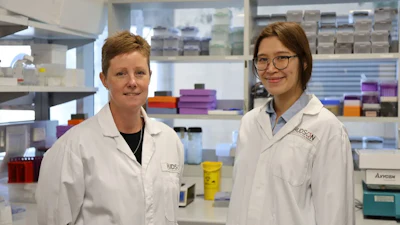
Researchers at Hudson Institute of Medical Research discovered that epithelial cells lining the airways, not immune cells, are the primary drivers of silicosis. The protein NLRP3 in these structural airway cells triggers inflammation and lung scarring when silica particles are inhaled, offering a new therapeutic target for this previously incurable lung disease.
- Global silicosis prevalence increased 91.4% between 1990 and 2019, with engineered stone exposure causing severe disease in months rather than years
- The protein NLRP3 in epithelial cells senses silica particles and triggers a powerful inflammatory response
- Targeting epithelial NLRP3 with inhaled or locally delivered drugs could stop silicosis progression early and avoid irreversible lung scarring
Researchers at Hudson Institute of Medical Research in Australia have made a breakthrough in silicosis — a life-threatening pulmonary condition that occurs from inhaling silica dust. Their findings are detailed in the paper, “Epithelial NLRP3 Drives Silica-Induced Lung Injury and Fibrosis Through Il-18 and Pro-Fibrotic Neutrophil Recruitment,” published in the international journal, Particle and Fibre Toxicology.

Previously, scientists believed that immune cells (specifically macrophages) triggered the lung inflammation and scarring that leads to silicosis. Now, researchers have confirmed the instigator to be structural airway cells. The groundbreaking discovery helps identify a novel therapeutic target for the disease that is currently incurable.
 Gross pathology comparison of a healthy human lung (right) and a lung with advanced silicosis (left).Hudson Institute of Medical Research
For a long-time, silicosis was associated with industries like mining and quarrying. However, the demand for engineered stone has created a new, alarming form of the disease. Rather than chronic low-level exposure that occurs over 10 to 30 years, high-level silica dust exposure to engineered stone can lead to severe silicosis in a matter of months.

According to the National Institutes of Health, the global incidence and prevalence of silicosis increased 64.6% and 91.4%, respectively, between 1990 and 2019. This study delivers strong evidence that will help researchers and clinicians better understand and treat silicosis.
“This is why new treatments are urgently needed. Silicosis is irreversible and the damage accumulates silently over time. We need therapies that can stop the disease in its tracks,” said senior author and professor Michelle Tate, PhD.
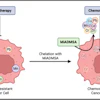
Dr. Tate, who is head of the research group, found that epithelial cells that line the lungs’ airways, specifically the protein NLRP3, sense distress and sounds an alarm.
“When silica particles enter the lung and are taken up by epithelial cells, they cause significant distress, triggering NLRP3 and initiating a powerful inflammatory response,” Dr. Lam said.
The researchers removed NLRP3 from epithelial cells in experimental models to validate the pathway. The results of eliminating the protein were substantial:
- Significantly reduced early inflammation
- Blocked recruitment of a persistent, harmful profibrotic immune cell population
- Significantly reduced long-term lung damage
“This research gives us a clear therapeutic strategy,” Dr. Lam said. “If we can develop drugs that block epithelial NLRP3 activation, we may be able to stop silicosis in its early stages.”
The research group noted that since epithelial cells line the airways, they are more accessible and receptive to locally delivered or inhaled drugs. Using precision medicine to target the disease at its source can help avoid immune-related symptoms and prevent irreversible inflammation and scarring, the team said.

“Silicosis is a preventable disease, but for thousands of workers already exposed, prevention is not enough,” Dr. Tate said. “Our goal is to deliver real therapeutic options — and this discovery is a major step toward that.”