Research published in Science Advances identified vitronectin — a protein found in the lungs — activates scarring associated with pulmonary fibrosis (PF). Gang Liu, PhD, associate professor at the University of Technology Sydney (UTS) School of Life Sciences in Australia, was co-first author of the paper, “Vitronectin Metabolically Programs Profibrotic Macrophages in 3D Cultures and Idiopathic Pulmonary Fibrosis.”

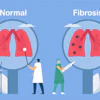
“In pulmonary fibrosis, the normal wound healing process in the body goes wrong. Instead of repairing damaged tissue, it starts to produce scar tissue in the lungs,” Dr. Liu said in a UTS news release. “People with idiopathic pulmonary fibrosis [IPF] have a very short survival time, usually only two to five years from diagnosis. Only two drugs are approved to treat it, and neither of them can reverse the scarring and cure the disease.”
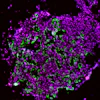
Senior author Katrina Binger, PhD, led a team that developed a 3D model of cultured lung tissue that simulates the fibrotic environment. She isolated vitronectin after discovering its role in reprogramming macrophages to produce scarring rather than mend scarring.
“We normally think of vitronectin as a structural protein that maintains the integrity of organs like the lungs. But we found it also can act as a signal,” said Dr. Binger, who is an associate professor in the department of biochemistry and molecular biology at Monash University. “Vitronectin changes how macrophages produce energy, and this drives them to have a heightened fibrotic state.”
Dr. Binger said the 3D model was essential to understanding the mechanics of pulmonary fibrosis, noting 2D cultures weren’t sophisticated enough to pick up on the changes. Her experiment was confirmed in tissue samples from patients with IPF as well as in animal models examined by Dr. Liu’s team — both of which contained high levels of vitronectin. In contrast, mice models that lacked vitronectin demonstrated a protected fibrotic environment, with reduced scarring, reduced inflammation and improved lung function.

The researchers said their next step is to identify novel treatments that target the vitronectin-macrophage pathway to treat scarring in patients with IPF.
“Now, we can work to identify new drugs that can most effectively inhibit vitronectin so we can translate this research into clinical practice and help find a new cure for this debilitating disease,” Dr. Liu said.