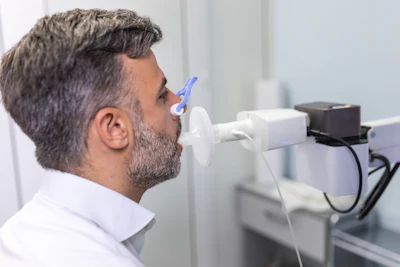
Researchers at Griffith University have found exhaled breath can help identify cancerous and noncancerous lung nodules, potentially reducing unnecessary invasive procedures like biopsies.
- Technology: Electronic nose (eNose) and gas chromatography-mass spectrometry analyze volatile organic compounds in exhaled breath.
- Clinical impact: 95% of pulmonary nodules on CT scans are noncancerous, making noninvasive screening valuable for avoiding unnecessary biopsies.
- Purpose: The breath test aims to help clinicians prioritize which patients need invasive intervention, not replace biopsies entirely.
Researchers from Griffith University in Queensland, Australia, have found a novel approach to differentiating cancerous and noncancerous lung nodules: combining a simple, noninvasive breath test with emergent technology. This discovery could be a breakthrough for diagnosing lung cancer, the said.

The research team published their results in MedComm. The paper, “Complementary Breath Profiling Using eNose and Gas Chromatography-Mass Spectrometry for Noninvasive Triage of Indeterminate Pulmonary Nodules,” describes how the team applied two parallel technologies to exhaled breath samples.
“We studied an electric nose, or eNose, which identifies patterns in breath chemicals. The second technology was gas chromatography-mass spectrometry, which identified specific volatile organic compounds in breath,” said Chamindie Punyadeera, PhD, a professor at Griffith’s Institute for Biomedicine and Glycomics, in a university news release. “Both breath-based approaches showed substantially better discrimination between malignant and benign nodules than models using standard clinical information alone.”
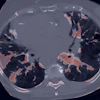
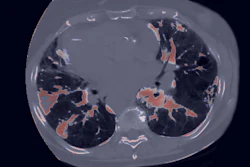
Patients with lung nodules often undergo invasive procedures, such as CT-guided lung biopsies, bronchoscopies or surgeries, to obtain tissue samples and confirm diagnosis. According to the researchers, 95% of pulmonary nodules identified on CT scans turn out to be noncancerous.
“Biopsying lung nodules can be technically challenging, particularly when lesions are small or difficult to access, and can cause complications such as pneumothorax or collapsed lung,” said co-author Xi Zhang, PhD.
“While a simple breath test is showing promise in identifying which nodules are most likely to be malignant, it is not intended to replace biopsies, but rather to help clinicians decide who needs invasive intervention most urgently,” added Dr. Zhang. “It is hoped it could also potentially reduce unnecessary procedures for patients with benign nodules by including the noninvasive test into routine care.”

The research was conducted by Griffith PhD student Waqar Ahmed Afridi and funded by Tour de Cure.