A German study found that a triple therapy combining elexacaftor, tezacaftor and ivacaftor can restore cystic fibrosis CFTR channel function in young children, indicating early treatment produces better outcomes.
- The Charité study showed triple therapy restored CFTR channel function to 90-100% in children versus approximately 50% in adolescents and adults.
- The earlier the treatment begins, the more effective it is, with significant functional improvements in children aged 2-11.
- Early treatment prevents disease progression, avoids irreversible lung tissue changes and dramatically improves both life expectancy and quality of life.
Cystic fibrosis (CF) is an incurable genetic disorder manifested by severe respiratory symptoms, such as thick mucus in lungs and chronic infections, as well as problems in the liver, intestines and pancreas. A triple therapy that combines elexacaftor, tezacaftor and ivacaftor helps address the underlying cause.

A recent German study, “Elexacaftor/Tezacaftor/Ivacaftor Improves CFTR Function to Near-Normal Levels in Children With Cystic Fibrosis,” assessed the therapy’s functional efficacy in young children. The findings, which were published in the European Respiratory Journal, suggest the earlier treatment begins, the better the outcomes.
“Until a few years ago, life expectancy for those affected [with CF] was significantly reduced. Thanks to the triple therapy, which has been available since 2020, both life expectancy and quality of life for patients have improved dramatically,” said physician-scientist Simon Gräber, MD, in a Charité – Universitätsmedizin Berlin press release. Dr. Gräber is head of the junior research group Precision Medicine in Cystic Fibrosis at Charité’s department of pediatric respiratory medicine, immunology and critical care medicine.
Previous clinical studies indicated the triple therapy had greater improvements in children than in older patients using the sweat test — a common procedure that helps diagnose CF. The test measures salt concentration in sweat; a high salt content indicates a person’s CFTR (cystic fibrosis transmembrane conductance regulator) channels are not functioning properly.
According to researchers, other studies had demonstrated that the triple therapy could restore CFTR channel function to approximately 50% in adolescents and adults. However, this measurement had not been evaluated in children.

“With our study, we wanted to investigate this finding and examine, at the functional level, the extent to which the triple therapy restores CFTR channels in children, and whether this effect is more pronounced than in adults,” said Marcus Mall, MD, director of the pediatric respiratory medicine, immunology and critical care medicine at Charité.
In their study, Charité researchers evaluated 26 children with CF, aged two to 11 years old, who had at least one of the most common disease-causing genetic defects (the F508del mutation).
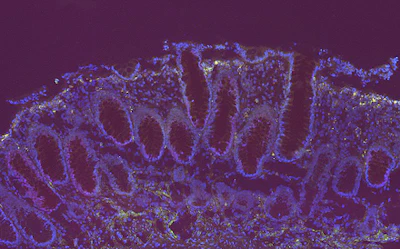
The researchers performed a sweat test on and assessed nutritional parameters of each child prior to beginning treatment and again at four months after initiation. They also collected small samples of the intestinal mucosa to measure electrical current and examine its function of the CFTR channels.
“A functional CFTR channel transports negatively charged chloride ions. We can detect and quantify this transport by measuring the current,” said Dr. Gräber. “The result was astounding.”
According to Dr. Gräber, the triple therapy restored the participating children’s CFTR channel function to 90%–100%.
“We really hadn’t expected that the children treated with the triple therapy would have values close to normal — that is, values similar to those of children without cystic fibrosis,” said Dr. Mall. “Such positive findings regarding the functional efficacy of triple therapy in children are truly remarkable and offer hope.”

Dr. Gräber said the study employed the same methodology as the ones that measured CFTR channel functionality in adolescents and teens.
“In comparison, the restoration of CFTR function was significantly more pronounced in younger children than in adolescents and adults,” he said. “We were able to identify a clear correlation with age here: The younger the person, the more effective it is.”
The results indicate that beginning treatment in early childhood can help prevent disease progression and avoid associated functional impairments and irreversible changes in lung tissue, Dr. Gräber said.
“With our latest study, we now provide a mechanistic explanation — based on the functional improvement of the CFTR channel — for why starting treatment early is particularly promising,” said Dr. Mall.
The Charité research team said it plans to conduct further studies using single-cell data to analyze mucosal cells and better understand how the triple therapy works at the molecular level.