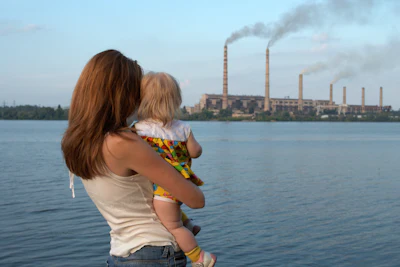
Children with genetic risk factors for COPD who are exposed to high levels of air pollution show reduced lung function growth, suggesting that early-life environmental factors combined with genetics may lay the foundation for COPD development later in life.
- A study of 484 Swiss children found that genetic COPD risk combined with high air pollution exposure reduced lung function growth between birth and age six.
- Fine particle pollution (PM2.5) and nitrogen dioxide (NO2) were the primary pollutants measured in the research.
- The effect of genetic risk on lung function was much weaker in children from low-pollution areas, highlighting the importance of environmental factors.
- Researchers used infant lung function tests at birth and spirometry at age six to track lung development across critical early years.
- Early-life air quality protection may have long-term benefits for children's respiratory health and COPD prevention.
Recent research suggests a genetic risk for COPD combined with exposure to higher levels of air pollution could lead to an increased risk of developing COPD later in life.
According to a press release, the research was presented at the European Respiratory Society (ERS) Congress 2026 in Barcelona, Spain.

The study found that babies born with a higher risk for COPD showed reduced lung function growth between birth and six years. However, this pattern was only found in children who were exposed to higher levels of air pollution.
“COPD develops through a combination of genetic factors and environmental exposures across the lifespan, leading to an accelerated decline in lung function,” said lead researcher Carla da Silva Sena, MD, from University Children’s Hospital Basel UKBB, the University of Basel and Bern University Hospital in Switzerland. “While COPD is often associated with smoking, growing evidence suggests that genetic and environmental factors in early life may also contribute to the foundations of the disease, particularly during lung development in infancy and childhood.”
The research included 484 children who were taking part in the Basel-Bern Infant Lung Development (BILD) cohort, a longitudinal Swiss birth study that follows children born between 1999 and 2020.
Using data from the cohort, the researchers assessed the lung function of children in the first month of life using the infant tidal breathing test, which records their natural breathing as the sleep. At age six, children took part in a spirometry test. Researchers estimated their exposure to outdoor pollution, including fine particles (PM2.5) and nitrogen dioxide (NO2), from birth until age six.

The researchers also collected genetic information from the children’s blood samples to develop a polygenic risk score for COPD. They found that the genetic risk for developing COPD was aligned with lower lung function growth but only in children who grew up in the areas with the highest PM2.5 air pollution. In children from areas with lower pollution, the effect was much weaker. A similar pattern was found between lung function growth and higher levels of NO2 exposure.
“This study adds to the evidence that early-life environment matters for lung health, and not just for children who already have breathing problems, but potentially for how lungs develop over time in seemingly healthy children,” said Dr. da Silva Sena. “It reinforces that protecting air quality in early life may benefit children’s long-term health.”
Researchers said they plan to follow the children into adolescence and adulthood to see whether the differences in lung function persist or grow over time.