New research shows inhibiting the inflammatory enzyme caspase-1 significantly reduces lung tumor development in high-risk patients.
- MIT study identified caspase-1 as a key target for preventing lung cancer by blocking inflammatory pathways linked to tumor development.
- In mouse models, 20% of mice treated with both caspase-1 and IL-1 beta inhibitors developed zero tumors, while single inhibitors significantly reduced tumor size and number.
- The proposed caspase-1 inhibitor drug has already been tested in humans for rheumatoid arthritis, making it a safer candidate for repurposing in cancer prevention.
- This oral medication approach is more practical than antibody treatments requiring intravenous injection, improving accessibility for preventive therapy.
A study led by researchers from Massachusetts Institute of Technology (MIT) in Cambridge has demonstrated that inhibiting the inflammatory enzyme capsase-1 reduces the likelihood of developing lung tumors in patients who are at high risk.
The team tested the treatment in mouse models and reported their findings in the paper, “Multimodal Profiling of Pro-Inflammatory Protease Activity Identifies Caspase-1 as a Target for Lung Cancer Interception,” published in Science Advances.

“You can imagine a future where you get a test and if you’re deemed high-risk, you go on a preventive medicine. This concept is called cancer interception, and it could help millions of people,” said senior author Sangeeta Bhatia, MD, PhD, in a university news release. Dr. Bhatia is the John and Dorothy Wilson Professor of Electrical Engineering and Computer Science and Institute for Medical Engineering and Science at MIT. She also lead’s the university’s Laboratory for Multiscale Regenerative Technologies.
Dr. Bhatia’s lab developed diagnostic nanosensors to detect and track proteases that are active in certain tissue and disease states. According to her, proteases help regulate inflammation and guide its migration, which means they can impact tumor growth. Researchers used the tool to identify proteases involved in IL-1 beta-mediated inflammatory pathways.
“We know that proteases are very important in inflammation, and we wanted to pinpoint which ones might be the most active during early lung cancer development,” said lead author Cathy Wang, PhD, an MIT graduate student.
The study employed a mouse model called KPS that stimulated a high-risk, precancerous state prior to tumor formation or detection. This essentially produced cancer-causing mutations in the p53 and Kras genes, activating T cells and lung inflammation.

After five weeks, the researchers injected an IL-1 beta blocker antibody into some mice while leaving others untreated. After another three weeks, they compared the results using the nanosensors.
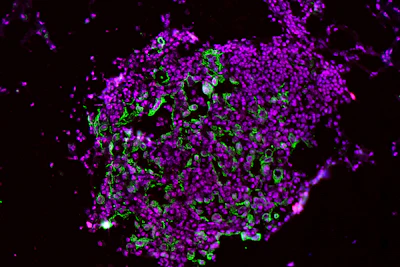
The untreated mice all developed lung tumors containing high levels of capsase-1. The group of treated mice developed significantly fewer tumors and displayed considerably less capsase-1 activity. Further analysis of human lung fluid samples confirmed increased activity of capsase-1 in lung cancer patients compared to healthy donors. Both groups shared a common smoking history.
Next, the researchers evaluated whether a capsase-1 inhibitor would have similar protective effects as IL-1 beta inhibitors by treating the at-risk mice with one or both of the inhibiting drugs. Approximately 20% of mice treated with both capsase-1 and IL-1 beta inhibitors developed zero tumors. In the mice that received only one inhibitor (capsase-1 or IL-1 beta), the tumors were significantly smaller and fewer in number than tumors in the untreated mice.
According to the researchers, the capsase-1 inhibitor drug has been evaluated in clinical trials for other diseases, such as rheumatoid arthritis. They hope to follow the same process for use in preventing lung cancer.

“What’s so attractive about using this capsase-1 inhibitor is that it has actually been tested in humans,” said Dr. Bhatia. “It’s already been through safety studies, and we think it could potentially be repurposed for cancer prevention.”
Dr. Bhatia also said capsase-1 inhibitors can be administered orally, unlike antibodies which must be given intravenously. This makes them more attractive as a noninvasive preventive treatment.