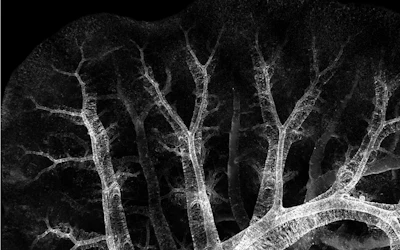
Researchers found that mutations in the TBX4 gene can cause excessive smooth muscle to form in the lungs, leading to progressive lung disease in infants and children.
- TBX4 is the second most common genetic cause of pediatric pulmonary hypertension (PH)
- Research shows TBX4 and TBX5 proteins play a critical role in preventing excess smooth muscle formation during lung development
- These findings could lead to new targeted therapies for pediatric pulmonary hypertension in the future
Researchers from Michigan State University (MSU) in Lansing and Stanford University School of Medicine in California have examined the role of TBX4 to expand understanding of pulmonary hypertension (PH) in children. They published their paper, “Excessive Postnatal Smooth Muscle Differentiation in a Lung-Specific Model of TBX4-Related Pulmonary Hypertension,” in JCI Insight.

The TBX4 gene is the second most common genetic cause of pediatric PH, according to the researchers, but information on the gene’s critical role in developing the chronic condition was lacking.
“TBX4 normally plays a role in early lung development. When TBX4 doesn’t function properly, cells in the lung do not mature correctly and lung development is severely affected. This results in lung disease which is fatal at birth or pulmonary arterial hypertension in infants and children,” said Ripla Arora, PhD, in a MSU press release. Dr. Arora is an associate professor in the MSU College of Human Medicine’s department of obstetrics, gynecology and reproductive biology.
In a study, Dr. Arora and colleagues used 3D imaging and mice models to analyze lung development when the TBX4 gene and closely related TBX5 gene were removed. They observed that without the proteins, a surplus of smooth muscle formed around small and large pulmonary blood vessels as well as extra smooth muscle in and around the lungs.
“That tells us that these proteins are very, very instrumental in setting up the lung plan,” Dr. Arora said. “One of their main roles is to stop smooth muscle from forming. You need enough smooth muscle to cover the bronchi and the airways and the larger blood vessels. You cannot have excess and extra smooth muscle.”

Further, the researchers acknowledged that the smooth muscle continues to build up over time, which is why PH is a progressive disease. This contributes to inflammation and high blood pressure in the lungs.
The research helps identify how the lack of TBX4 affects lung development, which could one day lead to new targeted therapies, Dr. Arora said. She also wants to compare fatal cases of pediatric PH with children who survive to see what may be different.
“The type of research we do helps to lay a foundation of scientific knowledge years before treatments for these diseases exist,” she said. “Our research is critical for discovering how and why genetic mutations can cause illnesses so we can eventually learn how to prevent or treat them.”