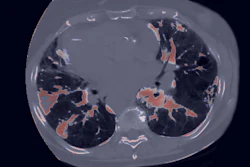
Mosliciguat, an investigational inhaled drug, successfully completed its phase 2 clinical trial for treatment of pulmonary hypertension associated with interstitial lung disease, achieving a 56.3% placebo-adjusted reduction in pulmonary vascular resistance and significant improvements in exercise capacity and heart function.
- Mosliciguat, an investigational inhaled drug, is a soluble guanylate cyclase (sGC) activator.
- Patients who received mosliciguat showed a 56.3% reduction in pulmonary vascular resistance compared to placebo in the phase 2 PHocus trial.
- Exercise capacity significantly improved by 115 feet (35.2 meters) at week 16, increasing to 173 feet (52.7 meters) at week 24.
- Mosliciguat was well tolerated across all patient subgroups including different lung disease types and severity levels.
Pulmonary hypertension associated with interstitial lung disease (PH-ILD) is a less common, but extremely challenging form of pulmonary vascular disease. A collaborative research team, which includes investigators from the Institute for Lung Health (ILH) and the German Center for Lung Research, has developed a potentially new therapeutic for patients who have PH-ILD.

Mosliciguat, an investigational inhaled drug, is a soluble guanylate cyclase (sGC) activator. Its development stems from earlier research that established riociguat, the first sGC stimulator approved for the treatment of pulmonary arterial hypertension (PAH) and chronic thromboembolic pulmonary hypertension (CTEPH) in 2013.
According to an ILH press release, mosliciguat is the next iteration of a translational research program focusing on the nitric oxide (NO)-sGC-cGMP pathway.
“What is particularly important to us is the continuity of the scientific concept. The NO–sGC–cGMP pathway has been investigated in Giessen for decades, from fundamental vascular biology and experimental pharmacology through the first successful translation with riociguat,” said Werner Seeger, MD, PhD, a professor of internal medicine at the Justus-Liebig University Giessen. “Mosliciguat now takes this principle into a biologically distinct disease setting and represents precisely the kind of long-term, bench-to-bedside research that the Institute for Lung Health and the German Center for Lung Research were created to enable.”
The key differences between the two drugs are the mechanism of action and route of administration. Riociguat is a dual action, oral medication that stimulates the sGC heme-protein receptor independent of NO. Mosliciguat is a dry-powder inhalant that activates heme-free, NO-insensitive forms of the enzyme — a common state for patients with PH-ILD, who have chronic inflammation and remodeled lung tissue and pulmonary vessels. As an inhaled drug, mosliciguat is delivered directly to the lungs to restore cGMP signaling locally while significantly reducing systemic vasodilator effects, according to drug manufacturer Roivant.

Results from the first clinical trial of mosliciguat, phase 1b ATMOS, were published in Thorax in 2025. With a single inhaled dose of mosliciguat, ATMOS trial participants with PAH or CTEPH demonstrated prolonged reductions in pulmonary vascular resistance.
The subsequent phase 2 PHocus study also met its endpoint at week 16 with a 56.3% placebo-adjusted reduction in pulmonary vascular resistance (-51.3% mosliciguat vs. +6.6% placebo, p<0.0001), the researchers reported. The randomized, double-blind, placebo-controlled trial included 135 adults with PH-ILD at 87 centers across 20 countries.
Findings from PHocus were presented at the European Respiratory Society International Congress 2026. They showed the once-daily dose of mosliciguat was well tolerated and favored across all prespecified subgroup analyses, including different types of underlying interstitial lung disease, pulmonary vascular disease severity, prior or existing antifibrotic treatment and use or nonuse of PDE5 inhibitors, the researchers said.

Participants also experienced a significant increase in exercise capacity in addition to the hemodynamic improvement. Six-minute walking distance improved by 115 feet (35.2 meters) compared to placebo at week 16. After prespecified exploratory analyses, the placebo-adjusted difference increased to 173 feet (52.7 meters) at week 24. The researchers also observed noticeable improvements in patients’ NT-proBNP (a biomarker of cardiac strain) as well as other measures of right-heart and pulmonary vascular function.
“PH-ILD remains a disease with a very high medical need,” said lead researcher Ardeschir Ghofrani, MD, a senior pulmonary vascular researcher at the Giessen lung research hub. “What is encouraging in PHocus is not only the magnitude of the pulmonary vascular effect, but its consistency across prespecified patient groups and the accompanying improvement in exercise capacity. These phase 2 results provide a strong rationale for phase 3. The decisive next step is now to confirm these findings in a larger population and determine whether they translate into sustained clinical benefit for patients.”

The international PHrontier phase 3 trial (NCT07816185) is underway, with approximately 375 patients with PH-ILD who will randomly receive either mosliciguat or placebo. The study’s primary endpoint is change in six-minute walking distance after 24 weeks, and its secondary outcomes include pulmonary vascular resistance, NT-proBNP and time to clinical worsening.