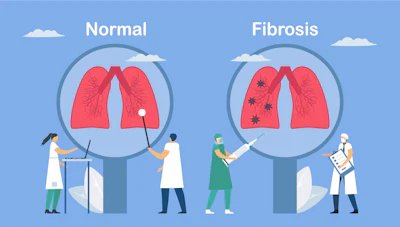
Researchers have discovered a previously unknown pericyte cell type called Peri2 as a key driver of lung scarring in pulmonary fibrosis.
- Peri2 cells showed increased activity of pro-fibrotic genes (COL1A1, COL3A1, RGS5, ACTA2) and decreased activity of the protective, anti-fibrotic FOXF1 gene
- Only 10% of pericytes in PF patient lungs contained FOXF1, compared to 60% in healthy lungs
- FOXF1 identified as a potential therapeutic target for developing new pulmonary fibrosis treatments
According to a study published in Nature Communications, a newly discovered pericyte group called Peri2 drives scar tissue formation in the lungs that is a hallmark of pulmonary fibrosis. The paper, “Emergence of Fibrotic Pericytes and Their Transcriptional Regulation in Pulmonary Fibrosis,” provides insight on how this occurs and how it can be mitigated.

Pericytes, which are in the outer lining of small blood vessels, are responsible for maintaining structure and aiding in tissue repair. When analyzing lung tissue samples of healthy individuals and patients with idiopathic pulmonary fibrosis (IPF), the researchers found a new type of pericyte — Peri 2 — was only present in IPF lungs. They confirmed the finding in mouse models of PF.
The Peri2 cells contained lower levels of specific pericyte markers and showed increased activity of pro-fibrotic genes, such as COL1A1, COL3A1, RGS5 and ACTA2. Conversely, the researchers identified “nearly undetectable levels” of FOXF1 and reduced activity of three other anti-fibrotic genes — ID1, TBX3 and HEYL.
According to the scientists, only 10% of pericytes in lung tissue samples from PF patients contained FOXF1. That’s compared to approximately 60% in healthy patient samples.
“These findings underscore the critical role of FOXF1 in modulating lung fibrogenesis and highlight its potential as a therapeutic target for pulmonary fibrosis,” the authors wrote.
The research team employed lineage tracing when observing the pericytes and suggested the Peri2 cells detach from blood vessels, contributing to lung scarring and pulmonary fibrosis.
“Elucidating the mechanisms by which pericytes contribute to fibrosis is essential and holds great promise for uncovering novel therapeutic targets and improving outcomes for patients with pulmonary fibrosis,” wrote the researchers.