Exposure to multiple heavy metals can make lung cancer cells resistant to chemotherapy, but a chelator drug called MiADMSA can reverse this resistance and restore treatment effectiveness.
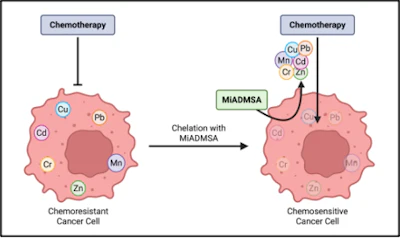
- Heavy metals found in tobacco smoke and pollution — including cadmium, chromium, copper, lead, manganese and zinc — have limited individual effects but become dangerous when combined.
- When metals accumulate together, they trigger chemoresistance in lung cancer cells, making tumors harder to treat with standard chemotherapy.
- MiADMSA, a drug originally designed to treat metal poisoning, successfully reversed drug resistance when combined with chemotherapy in laboratory and mouse studies.
Researchers at Durham University in England have made a significant discovery that could impact the outcomes of patients receiving chemotherapy treatment for lung cancer. Their study identified a link between certain metals and tumor resistance to chemotherapy.

The full paper, “Multi-Metal Cooperation Drives Chemoresistance in Lung Cancer and Is Reversed by the Membrane-Permeable Chelator MiADMSA,” was published in Cell, Death and Discovery.
Metals such as cadmium, chromium, copper, lead, manganese and zinc are commonly found in tobacco smoke and/or pollution. Scientists tested these metals at low levels to see if and how they are related to lung cancer. They found that each metal individually has limited effects but when accumulated and combined, the metals make lung cancer cells increasingly resistant to chemotherapy.
Although the findings are experimental and preclinical, the study is the first to demonstrate that mixed heavy metals stimulate chemoresistance, the researchers said.
On a positive note, the investigators found that the drug resistance can be reversed with monoisoamyl dimercaptosuccinic acid (MiADMSA) — a chelator drug created to treat metal poisoning.
When the team administered MiADMSA in combination with chemotherapy, the cancerous tumor cells became more receptive to treatment. In mice, the approach also helped reduce tumor growth associated with metal exposure.
The authors said the new knowledge could open the door to improved therapeutic strategies that combine chemotherapy with multi-metal chelation treatments, potentially reducing side effects and improving patient outcomes.
Next steps, they said, are to test MiADMSA in clinical trials and evaluate if the approach could apply to other cancers where metal toxicity is common.

This research was led by Patricia Muller, PhD, and Will Brittain, PhD, associate professors in the university’s departments of biosciences and chemistry (respectively), alongside Netherlands-based Pleco Therapeutics.