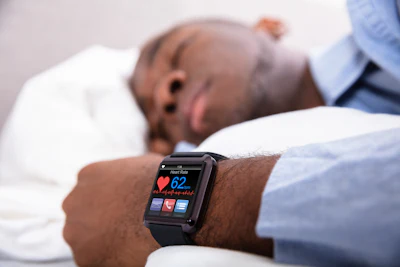
Sleep data captured with a wearable device could help clinicians better tailor care by identifying patients with COPD who may need additional support in their course of pulmonary rehabilitation.
That’s according to a paper, “Wearable Sleep Measures May Improve Machine Learning Prediction of Home-Based Pulmonary Rehabilitation Among Patients With Chronic Obstructive Pulmonary Disease: A Proof-of-Concept Study,” published in Mayo Clinic Proceedings: Digital Health.

The researchers aimed to evaluate whether baseline sleep measures from a wrist-worn activity monitor, incorporated with machine learning models and traditional clinical indicators, improved the prediction of patient engagement in a 12-week, home-based COPD pulmonary rehabilitation (HBPR) program.
“As a scientist and engineer, I wanted to explore how Stephanie Zawada, PhD, MS
To test the hypothesis, the researchers collected sleep measurements on participants one week prior to HBPR. They processed the measurements using a validated Tudor-Locke algorithm and an analysis to generate a Composite Sleep Health Score. The researchers defined engagement as completion of one or more recommended activities per week for the 12-week duration of the study.
In models adjusted for age, sex, current smoker status, FEV1 and other variables, the Composite Sleep Health Score significantly improved the prediction of 12-week engagement only in support vector machine models. Specificity and accuracy also improved by 20.4% and 2.5%, respectively.

The researchers concluded that the proof-of-concept findings support additional investigation into the use of wearable devices for sleep measurements to improve screenings for HBPR eligibility. This could help identify “patients who will clinically benefit from fully remote PR,” they wrote.
“Adding wearable data provides a more comprehensive view of a patient’s daily pattern,” said Emma Fortune Ngufor, PhD, senior author of the study and researcher in the Mayo Clinic’s Kern Center.
Researchers noted that additional investigation is needed to validate and refine the model in broader patient populations before clinical application.