Recent research identifies mast cells as central drivers of allergic asthma development, with a selective KIT inhibitor called THB001 showing promise in reducing airway inflammation, bronchoconstriction and structural lung changes in preclinical studies. Although results are encouraging, additional human studies are needed to confirm effectiveness in actual patients.
- The experimental drug THB001 selectively inhibits KIT, a critical regulator of mast cell survival and activation, consistently reducing mast cell activity across multiple experimental models
- Treatment prevented house dust mite-induced bronchoconstriction, airway hyperresponsiveness and inflammation while reversing structural changes including airway smooth muscle thickening and collagen deposition
- The therapy addressed both functional asthma symptoms and underlying disease mechanisms by targeting KIT-dependent mast cell signaling and reducing inflammatory lipid mediators
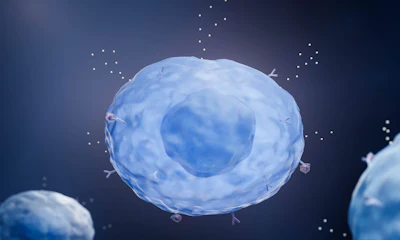
Recent evidence suggests mast cells play a fundamental role in the development and progression of allergic asthma, potentially opening the door to a new therapeutic approach focused on inhibiting a key cellular pathway. Mast cells are white blood cells that live in the body’s tissues and act as an alarm system for the immune system.

That evidence was revealed in the paper, “Selective KIT-Inhibition Supports Mast Cells as Key Drivers of Allergic Asthma Pathogenesis,” recently published in the Journal of Allergy and Clinical Immunology. Researchers investigated the impact of selectively targeting KIT, a critical regulator of mast cell survival and activation, using the experimental inhibitor THB001. The study’s authors noted the findings suggest that suppressing mast cell activity may prevent many of the hallmark features of allergic asthma, including airway inflammation, bronchoconstriction, airway hyperresponsiveness and structural remodeling of the lungs.
Although increased numbers of mast cells have long been observed in the airways of asthma patients, researchers said, their exact role in driving disease development has remained uncertain. The new study was designed to clarify that relationship by selectively disrupting mast cell function.
Researchers evaluated THB001 in human lung mast cells, isolated human airway tissues, guinea pig tracheal tissue and a house dust mite-induced animal model of allergic asthma. Across multiple experimental settings, the KIT inhibitor consistently reduced mast cell activity and its downstream effects. THB001 inhibited mast cell degranulation and survival and reduced allergen-triggered airway contraction.

In animal studies, the drug demonstrated broader effects. Treatment prevented house dust mite-induced bronchoconstriction and airway hyperresponsiveness while reducing airway inflammation. Researchers also observed reversals in several structural changes associated with chronic asthma, including thickening of airway smooth muscle, increased collagen deposition and elevated mast cell numbers. The therapy also reduced the production of inflammatory lipid mediators and altered asthma-related gene expression patterns.
According to researchers, the intervention addressed both functional symptoms and underlying disease mechanisms. By targeting KIT-dependent mast cell signaling, the treatment improved airway function and mitigated long-term changes that contribute to disease progression. Investigators reported partial reductions in mucus-producing cells as well, suggesting the potential for broader disease modification.
Although the results are encouraging, researchers said they are preclinical and additional studies are necessary to determine whether the benefits seen in laboratory and animal models translate to human patients.