Researchers at UC Riverside received a $3.5 million NIH grant to develop machine learning tools that can detect dyspnea in COPD and ICU patients by analyzing biomarkers, potentially helping physicians identify respiratory distress in patients who cannot communicate their symptoms.
- $3.5 million NIH grant awarded to UC Riverside for five-year dyspnea detection research project
- Machine learning models will analyze biomarkers to predict respiratory distress more accurately than clinical observation
- Two-phase approach: laboratory experiments inducing shortness of breath plus human trials with COPD and ICU patients
- Critical population: Study includes mechanically ventilated ICU patients who may be unable to communicate dyspnea despite experiencing severe distress
- Real-world impact: Technology could help physicians monitor respiratory comfort and guide treatment decisions while improving quality of life for COPD patients
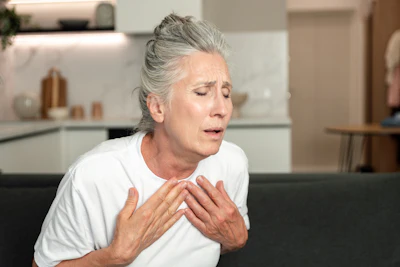
A researcher at the University of California Riverside has received a $3.5 million grant from the National Institutes of Health’s National Heart, Lung and Blood Institute to study dyspnea in patients with COPD and develop methods to identify when patients are suffering.

Erica Heinrich, PhD, an assistant professor at the UC Riverside School of Medicine’s Division of Biomedical Sciences, is no stranger to dyspnea research. A previous paper she co-authored, “A Machine Learning Approach to Predicting Dyspnea With Noninvasive Biomarkers,” was published in Respiratory Physiology & Neurobiology.
That study examined the use of machine learning prediction models to predict dyspnea using noninvasive biomarkers. The researchers found that their machine learning model exceeded the accuracy of observation estimates made on the same participants.
According to a press release, Dr. Heinrich’s goal for the new round of funding is to create a five-year project, including laboratory experiments and human trials with COPD patients, to better understand the physiological signals associated with dyspnea and develop new ways to identify when patients are suffering from the condition.
“The research could ultimately provide physicians with a new tool to recognize and monitor respiratory distress in patients who may be unable to communicate it themselves and help guide interventions to improve their comfort and outcomes,” Dr. Heinrich said.
The laboratory experiment portion of the program will induce shortness of breath in different populations and collect a range of biomarker data. Dr. Heinrich and her collaborators will use that information to develop a machine learning algorithm capable of predicting respiratory comfort. Dr. Heinrich said that, while her previous research demonstrated the model’s effectiveness with healthy lungs, the challenge of the new research will be to determine whether the model works across different patient populations.

The second part of the research project will involve the researchers monitoring multiple biomarkers in COPD patients while inducing shortness of breath through different mechanisms such as exercise and airflow resistance. The study will include an intensive care unit cohort at UC San Diego’s Jacobs Medical Center.
“The clinical population is particularly important because ICU patients can have severe lung pathology, while also receiving medications that can alter how the brain processes signals and how the patient perceives dyspnea,” Dr. Heinrich said. “Patients may be receiving pain medications, sedation or neuromuscular blockade that leaves them unable to communicate. However, paralytic drugs do not prevent dyspnea but mask a patient’s distress. Determining whether respiratory discomfort can still be accurately predicted under those circumstances is critical because these are among the patients who could ultimately benefit the most from this technology.”
Dr. Heinrich said she is particularly interested in patients who are receiving mechanical ventilation. She said there is strong evidence that ventilated patients can experience severe shortness of breath, which can increase anxiety and affect clinical outcomes, including when a patient can successfully be weaned from a ventilator.

The research could also benefit people living with COPD outside the hospital, she said.
“For these patients, quality of life is closely connected to the severity and frequency of their dyspnea,” Dr. Heinrich said. “A way to continuously monitor and quantify that experience could give physicians additional information to guide treatment. It could also give patients a stronger voice by providing objective data about the severity of the distress they experience.”
The project will bring together other UC Riverside researchers, like Shujie Ma, PhD, a professor of statistics with expertise in machine learning and working with real-time biomarker data, and Mona Eskandari, PhD, an assistant professor of mechanical engineering with expertise in lung tissue mechanics.
While the technology is not intended to replace a physician’s clinical judgement, Dr. Heinrich said she sees the research as the foundation for a tool that could give physicians information they currently lack.
“We hope that in the future, patient monitors can provide a readout indicating whether a patient receiving mechanical ventilation is experiencing significant dyspnea, allowing physicians to make more informed decisions about treatments and interventions,” she said.