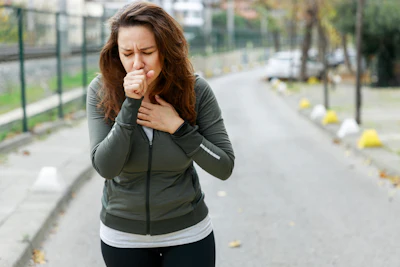
Regular walking reduces COPD symptom flareups by approximately 5% for every 1,000 steps taken daily. These benefits persist even in areas with high air pollution, according to a European study of 262 COPD patients.
- Walking 1,000 steps per day reduces COPD flareup likelihood by about 5%, with greater benefits at faster walking speeds.
- Benefits of regular walking persist regardless of air pollution levels at patients' home addresses, including particulate matter, nitrogen dioxide and ozone.
- While extremely high pollution concentrations were not tested, findings suggest walking is better than remaining inactive even in relatively polluted areas.
- Researchers recommend reducing air pollution exposure and walking in low-pollution areas whenever possible as the optimal approach.
Walking has long been recommended by health professionals for patients with COPD to help reduce symptom flareups. But one question has remained: Does it help those who live in areas with high pollution, or does the pollution cancel out the effects of exercise?

A new paper, “Interaction of Walking Activity and Long-Term Air Pollution on Exacerbation Rate in COPD,” sought to answer that question. The research, which was led by Alícia Josa-Culleré, PhD, and Judith Garcia-Aymerich, PhD, from the Barcelona Institute for Global Health in Spain, was published in European Respiratory Journal (ERJ) Open Research.
“In people who already have COPD, walking in a traffic-polluted area may increase their daily respiratory symptoms,” said Dr. Garcia-Aymerich in a press release. “But until now there has been no research on whether physical activity practiced in air polluted settings could have any harmful effects over time.”
The prospective cohort study included 262 people with COPD from five European countries. Regular walking activity amount (including step count and duration) and intensity were measured at baseline for seven days via single wearable devices.
Residential concentrations of particulate matter, black carbon, nitrogen dioxide and ozone were estimated using land-use regression models from the previous two years. Moderate-to-severe exacerbations over a two-year follow-up were obtained from medical records and paper diaries. The relationship between walking activity and air pollution on long-term exacerbation rate was estimated using multivariable mixed-effects negative binomial models.
The researchers found regular walking was associated with fewer symptom flareups, regardless of the level of air pollution at the patients’ home address. Walking 1,000 steps per day reduced the likelihood of flareups by about 5%, and regular walking at a faster pace saw those benefits increase, they said.

“We found no differential effects depending on the severity of COPD,” said Dr. Josa-Culleré. “Our study included concentrations of air pollution above accepted recommendations from the World Health Organization. However, our findings may not be applicable to areas with extremely high concentrations of air pollution.”
In fact, another study published earlier in 2026, “Effects of the Interaction Between Walking Activity and Air Pollution on Daily Respiratory Symptoms in People With COPD,” found that when black carbon concentrations were high, longer walking duration was associated with increased cough and sputum production in patients with COPD. However, that study did not find similar results with fine particulate matter and nitrogen oxide.
The researchers of the newer study acknowledged that the size of their study was modest, and so they may not have been able to detect small differences in the relationship between physical activity, air pollution and COPD exacerbations. They said they plan to conduct a similar study including more people and covering areas with very high levels of pollution.

“The take-home message from our study is not that we don’t need to worry about air pollution. Exposure to air pollution has been linked to multiple health outcomes,” said Dr. Josa-Culleré. “Reducing exposure to air pollution should still be recommended. Rather, our findings suggest that walking is still better than remaining regularly inactive, even for people living in relatively polluted areas. And of course, it’s better if people try to walk in low-pollution areas whenever possible.”