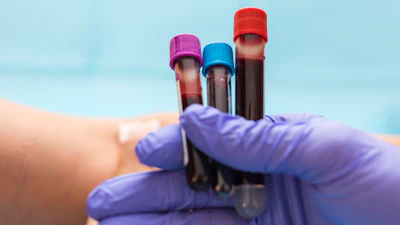
Analyzing the isolation of Pseudomonas aeruginosa in sputum, along with measuring blood eosinophil counts at various time points, could help assess the risk profiles of patients with COPD. This, in turn, could be used to help develop a more personalized treatment plan.

That’s according to researchers at the LKS Faculty of Medicine at the University of Hong Kong. Their study, “Differences in Blood Eosinophil Level During Stable Disease and During Exacerbation of COPD and Exacerbation Risks,” was published in the journal Lung.
According to a news release, the research team reviewed local research advances in 2024 and 2025, focusing on methods to predict acute COPD exacerbations. One of their key findings indicated that measuring blood eosinophil counts can help identify patients at risk for acute COPD exacerbations.
While international guidelines recommend measuring these levels at a single point in time, the team found that a variability of blood eosinophil counts between stable periods and acute exacerbations was associated with a higher risk of future exacerbations.
“The findings suggest that patients’ risk profiles could be stratified by measuring blood eosinophil counts at different time points, both during stable state and during the time of exacerbation, which can provide a more accurate prediction of exacerbation risk,” said study leader Herbert Kwok Wang-chun, MD, MBBS, clinical assistant professor in the Department of Medicine at the HKUMed School of Medicine.
The researchers also observed that sputum analysis can be used to predict acute COPD exacerbations. According to the findings, approximately 10% of COPD patients have Pseudomonas aeruginosa colonization in their airways, as detected through sputum analysis. This presence significantly elevates the risk of future exacerbations, underscoring the importance of including sputum analysis in the clinical management of COPD patients.

Dr. Kwok Wang-chun said the research team is planning additional analysis in the area.
“Our team is actively pursuing further research into COPD phenotyping and personalized treatment,” he said. “We are also leading a multinational, multicenter study involving eight countries and regions in Asia-Pacific to further refine personalized treatment strategies for COPD.”