Certain inhalers used to treat COPD are not only less harmful to the environment but can also lead to better patient outcomes. These findings are outlined in the paper, “Comparative Effectiveness and Safety of LAMA-LABA Inhalers in Chronic Obstructive Pulmonary Disease,” published in JAMA Internal Medicine.

Researchers from UCLA Health found that inhalers with a lower carbon footprint in one commonly used therapeutic class — the combined long-acting muscarinic antagonist (LAMA) and long-acting beta agonist (LABA) class — were associated with slightly better clinical outcomes in COPD patients compared to metered-dose inhalers (MDIs) in the same class.
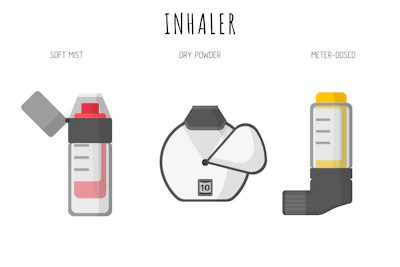
According to a news release, MDIs are more commonly prescribed but rely on propellants made from greenhouse gases also used in aerosol sprays to deliver medication to the lungs. Dry powder and soft mist inhalers do not use those propellants and therefore have a lower carbon footprint.
In addition, the dry powder inhaler, umeclidinium-vilanterol, was associated with a 14% lower risk of moderate or severe COPD exacerbations compared with the MDI glycopyrrolate-formoterol. The soft mist inhaler, tiotropium-olodaterol, was associated with a 6% lower risk of exacerbations compared with the metered-dose option.
The study found that safety outcomes were similar across all groups, with no meaningful differences in major cardiovascular events, urinary tract infections or pneumonia.
“The inhalers we studied are the first-line treatment for many patients with COPD, so it’s reassuring to see evidence that lower-emission inhalers may also be associated with slightly better clinical outcomes,” said William Feldman, MD, MPH, PhD, a pulmonologist and health services researcher at UCLA health and the study’s senior author. “These findings highlight the opportunity to reduce health care-related emissions while potentially improving patient care.”

Feldman said these findings were consistent with an earlier paper his team published in BMJ, “Comparative Effectiveness and Safety of Single Inhaler Triple Therapies for Chronic Obstructive Pulmonary Disease: New User Cohort Study.” That research showed dry powder inhalers in another class were also associated with slightly improved clinical outcomes compared to MDIs among patients with COPD.
In the more recent study, researchers analyzed insurance claims from adults aged 40 and older who were newly prescribed one of three common COPD inhalers and were continuously enrolled in a large commercial or Medicare Advantage health plan. They matched similar patients into comparison groups and followed them to see how long it took for them to experience a moderate or severe COPD flare-up. They also tracked heart events, urinary tract infections and pneumonia hospitalizations. The data, which included prescriptions from 2016 to 2025, were examined to compare how well the different inhalers worked and how safe they were.
Ultimately, the dry powder inhaler emerged as the most promising option, showing slightly better clinical outcomes than the other two inhalers as well as reduced environmental impact.

“This combination makes a strong case for using the dry powder inhaler when possible,” Dr. Feldman said. “Although some patients may require MDIs, dry powder inhalers and soft mist inhalers are a safe and effective option for most patients with COPD.”