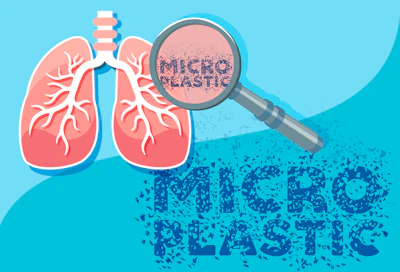
Recent years have seen more research into the increasing danger of microplastics in the environment. A study out of Australia suggests that breathing in these particles — which come from items such as synthetic carpets, clothing and household dust — could increase the risk of respiratory diseases, including COPD, asthma, pulmonary fibrosis and lung cancer.

The paper, “Inhaled Microplastics and Lung Health: Immunopathological Effects and Disease Implications,” was published in Food Bioscience.
According to a press release, the review was led by Keshav Raj Paudel, PhD, from the University of Technology Sydney, NICM Health Research Institute, Western Sydney University and the Woolcock Institute of Medical Research.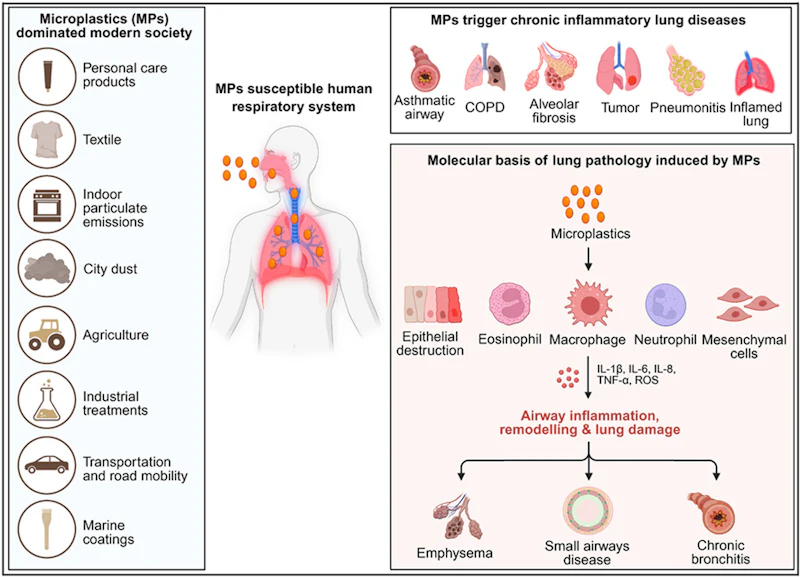 https://doi.org/10.1016/j.fbio.2025.108036
“Early research on microplastics focused mainly on oceans and human exposure through eating seafood,” Dr. Paudel said. “However, growing evidence suggests that inhalation may be an equally, if not more, significant role.”
Dr. Paudel said the lungs are especially vulnerable to damage from microplastics because of their large surface area and limited ability to clear the smaller particles that travel deeper into the lungs.
“Different plastics also have varying degrees of toxicity,” he said. “For example, polystyrene microplastics can stick to the lungs protective coating, disrupt air sac function and trigger chemical reactions that may damage lung tissue.”
The researchers highlighted the ability of microplastics to act as carriers for other pollutants and carcinogens. Plastic surfaces can attract chemicals and microorganisms, which means inhaled particles deliver these toxins and pathogens directly to the lungs.

They wrote that microplastics interacting with lung cells can lead to epithelial dysfunction, oxidative stress, endoplasmic reticulum stress, lysosomal damage and mitochondrial deregulation. All of these are linked to respiratory illnesses like COPD, asthma and lung cancer.
The research team is currently working on advanced in vitro models to simulate lung exposure and provide insight into molecular mechanisms. Dr. Paudel is also seeking further funding to investigate the genetic and therapeutic targets for microplastic-induced cellular damage using a CRISPR-Cas9 (gene-editing) approach.