If a clinical trial at the University of Alabama at Birmingham (UAB) is successful, people with emphysema could begin breathing a lot easier.
According to a news release, researchers at the university are enrolling patients in the BREATHE-3 trial, which is investigating an experimental treatment for emphysema-related hyperinflation.

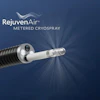
This condition causes the lungs to increase in size due to trapped air in the tissue. The novel treatment uses self-expanding nitinol airway scaffolds that are placed bronchoscopically to connect emphysematous lung tissue with central airways. These permanent scaffolds are designed to reinforce and expand collapsed airways, allowing trapped air to escape during exhalation.
UAB is one of a few select centers participating in the international trial and recently treated one of its first patients, identified as P. Hill. Hill said she has experienced quantifiable initial improvements in her breathing since the procedure.
“I can now breathe all the way to my belly button,” she said.
Surya Bhatt, MD, a professor in the department of medicine at the UAB Marnix E. Heersink School of Medicine and director of the Center for Lung Analytics and Imaging Research, is leading the study at UAB. He said the improvements in Hill are very encouraging.
“For patients like Ms. Hill, who have struggled with severe emphysema, hyperinflation creates a debilitating cycle where air becomes trapped in the lungs, making it progressively harder to breathe,” said Dr. Bhatt. “These airway scaffolds offer a new approach by keeping the airways open, essentially creating a pathway for trapped air to escape.”
So far, among 60 patients who have been treated with these airway scaffolds, researchers have observed significant improvement in lung function, with residual volume decreasing by an average of 753 milliliters at six months.

“What makes this treatment particularly promising is that it may benefit a broader range of emphysema patients than currently available options,” said Dr. Bhatt. “Many existing treatments are limited to patients with specific emphysema patterns or require the fissures or partitions between upper and lower lung lobes to be intact without any holes.”
According to the clinical trial details, participants will be followed for up to three years, with an estimated completion in 2029.