A new study has revealed surprising findings about Americans who’ve been diagnosed with lung cancer. Researchers assessed 1,000 consecutive patients undergoing treatment at Northwestern Medicine in Chicago and discovered 65% of them did not meet the existing U.S. Preventive Services Task Force (USPSTF) screening criteria. Of the excluded patients, a disproportionate amount were women and never smokers.

The study, “Age-Based Screening for Lung Cancer Surveillance in the U.S.,” was published in JAMA Network Open.
Currently, the USPSTF recommends lung cancer screening for adults ages 50 to 80, who smoke and have a 20-pack-year smoking history or previously smoked and quit within the past 15 years. This narrow guidance omits many individuals who may be at risk.
The research team suggests expanding universal age-based lung screening to adults ages 40 to 85. The study’s findings estimate this change could help detect 94% of lung cancers and prevent more than 26,000 unnecessary deaths annually.
“We moved to universal age-based screening for breast and colon cancer with tremendous success, and we need to move to the same approach for lung cancer,” said Ankit Bharat, MD, in a university news release.
Dr. Bharat is chief of thoracic surgery and executive director of the Northwestern Medicine Canning Thoracic Institute. He said the research proves that the altered approach has potential to save lives and significantly reduce health care costs of advanced treatments, exponentially outweighing the minimal risks from radiation exposure or biopsies.
“Chest screening offers something unique — with one low-dose scan, we can assess lungs, heart and bones comprehensively,” Dr. Bharat said. “This baseline scan becomes invaluable for monitoring their health over time.”

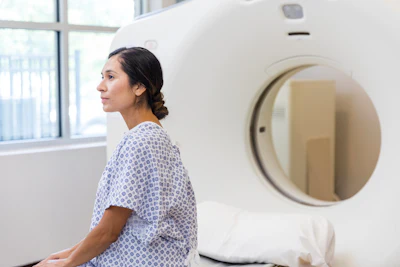
In response to the study, Northwestern Medicine established the Lung Health Center at the Canning Thoracic Institute. There, health care professionals encourage patients to receive a low-dose CT scan, which doesn’t include intravenous dyes, to detect for early lung cancer. The simple act creates a baseline image of the entire chest cavity, Dr. Bharat said, which can evaluate for other potential conditions, such as early signs of pulmonary fibrosis, cardiovascular risk or osteoporosis.
The center’s adoption of the new screening parameter comes at a time where more Americans are experiencing lasting respiratory effects from viruses like COVID-19 and work- or climate-related exposure.
“We’re seeing younger patients with respiratory problems from vaping, environmental exposures and COVID-19, who would never qualify for traditional screening,” said Scott Budinger, MD, chief of pulmonary and critical care at the Canning Thoracic Institute.
Specifically, the Lung Health Center has extended its screening recommendations to the following populations:
- Individuals who had COVID-19 and suffer from ongoing respiratory issues.
- Individuals with a family history of lung disease or pulmonary fibrosis.
- People who have been exposed to wildfire smoke, industrial pollution or high levels of radon.
- Individuals who have been exposed to secondhand smoke.
- Asian women and other demographics who have an increased risk of lung disease.
- Anyone seeking a baseline assessment.
“This initiative transforms how we approach chest health comprehensively,” said Momen Wahidi, MD, interventional pulmonologist and medical director of the Canning Thoracic Institute. “Instead of waiting for symptoms to appear, we’re giving patients and physicians a complete picture of chest health that can guide preventive care across multiple specialties.”

According to the news release, Northwestern Medicine will continue to analyze and publish its screening data to inform changes to USPSTF and other cancer screening guidelines.