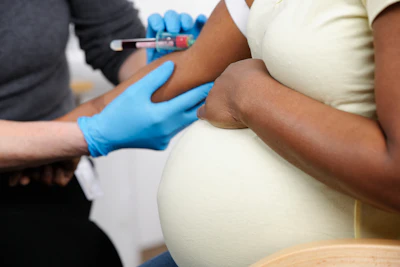
Kaiser Permanente research published in JAMA Network Open suggests a basic blood test can identify indication of a pulmonary embolism (PE) in pregnant patients. The test would help determine if those with labored breathing and/or chest pain require advanced imaging diagnostics, including CT scans, perfusion scans and compression ultrasounds as well as rule out those who can avoid unnecessary testing.

David Vinson, MD, was first author of the study, “Strategies to Reduce Advanced Imaging in Antenatal Pulmonary Embolism Diagnostics.” Dr. Vinson is an adjunct investigator at the Kaiser Permanente Division of Research (DOR) and an emergency medicine physician with The Permanente Medical Group (TPMG).
“Advanced imaging tests, like CT scans, can be used to diagnose a pulmonary embolism, but they add additional time and risk to a patient’s evaluation,” Dr. Vinson said in a news release. “Our study shows there is no need for every pregnant patient who might have a pulmonary embolism to have a CT scan when a D-dimer blood test — coupled with a simple decision aid — can identify a large proportion of patients for whom a CT scan is necessary.”
The study included 720 patient visits to a Kaiser Permanente Northern California hospital between October 2021 and March 2023. Of these visits, which occurred primarily in the emergency department (86%), 699 pregnant patients who experienced chest pain and/or difficulty breathing were evaluated for pulmonary embolism.
Researchers found that 534 patients (73%) received a D-dimer blood test. Nearly one-third of these patients had a normal D-dimer value, of which 96% did not get referred for additional testing. Another one-third of the patients who underwent blood tests received a slightly elevated D-dimer value, and about 50% of this group avoided advanced imaging.

In total, 229 pregnant patients underwent a compression ultrasound of the leg to detect potential blood clots, or deep vein thrombosis (DVT), which would indicate PE. Only three patients (1%) were diagnosed with DVT, and these patients also had suggestive symptoms, such as pain and swelling in one leg. Patients who reported no pain or swelling in one leg more than the other were not diagnosed with DVT.
The research group said the study validates multiple practice guidelines, which recommend reserving the use of compression ultrasounds for pregnant patients who have suggestive symptoms.
“Pregnancy increases the risk of blood clots, and missing a pulmonary embolism in a pregnant patient can result in severe complications, including death,” said study co-author Jeffery Sperling, MD, MS, a maternal-fetal medicine specialist with TPMG, in the same news release. “Shortness of breath and chest discomfort are common in pregnancy, so clinicians need reliable tools to distinguish symptoms that are normal from those that are life-threatening. This means it’s important to both identify patients with pulmonary embolism as well as avoid unnecessary radiation exposure from imaging, because it carries potential risks for the pregnant patient and their baby.”

The new study also confirms previous research that demonstrated the D-dimer test reduced advanced imaging up to 39% by eliminating PE in pregnancy. Other key findings of the study include:
- An emergency department is more than three times as likely to use the D-dimer blood test than a labor and delivery unit.
- The D-dimer blood test is more accurate in ruling out PE during the first trimester of a person’s pregnancy than the third trimester.
“We did this study because no one knew how often these tests were being used in the community setting to keep pregnant patients from having unnecessary advanced imaging tests,” said senior author Nareg Roubinian, MD, an adjunct investigator at the DOR and an intensive care doctor with TPMG. “Our findings suggest there may be more opportunities for clinicians to use this test when they suspect a pregnant patient might have a pulmonary embolism, regardless of how far along they are in their pregnancy and whether they are in the emergency department or in the labor and delivery setting.”