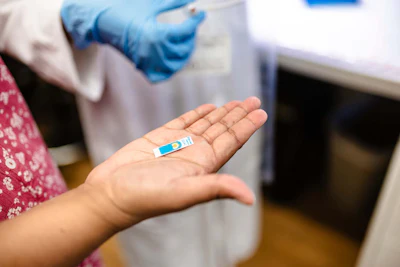
Researchers from the University of Texas at Dallas recently developed biosensor technology that may be able to detect lung cancer. The research team incorporated artificial intelligence (AI) into the device with the goal to identify cancer earlier and more easily using breath analysis.

“We built a screening tool that could allow physicians to catch the disease in its early phases, which improves outcomes. This technology offers a potentially affordable, quick and noninvasive breath analysis tool for cancer screening,” said corresponding author Shalini Prasad, PhD, in a university news release. Dr. Prasad is professor and department head of bioengineering in the Erik Jonsson School of Engineering and Computer Science.
Details and results of the study, “Electrochemical Breath Profiling for Early Thoracic Malignancy Screening,” were published in the journal, Sensing and Bio-Sensing Research.
The researchers programmed the electrochemical biosensor to recognize eight volatile organic compounds (VOCs) that are potential biomarkers for thoracic cancers, including lung and esophageal cancers. Using AI, the device analyzed the biochemical characteristics of 67 patient samples to determine if the VOCs matched those linked to the various cancers.
Out of the group, 30 patients had thoracic cancer confirmed with biopsy. The device was 90% accurate in identifying the VOCs in these confirmed cancer cases.
According to Dr. Prasad, inspiration for the device began during the COVID-19 pandemic.
“There was a lot of interest at that time in noninvasive technologies that could rapidly allow us to screen and isolate the spread of COVID,” said Dr. Prasad, who is also the Cecil H. and Ida Green Professor in Systems Biology Science. “The use of breath became very attractive because breath goes through our respiratory system and carries metabolites, which are indicators of disease.”

 Shalini Prasad, PhDThe University of Texas at Dallas
“There is a huge amount of data provided by the breath,” said Dr. Prasad. “What is important? What is not? All of this information comes from the machine learning algorithm. That’s why the partnership with computer science is critical. How meaningfully you integrate AI into a technology is important.”
Dr. Prasad’s clinical research team collaborated with Ovidiu Daescu, PhD, to hone the learning models and validate the technology, as well as experts and researchers at UT Southwestern Medical Center.
“The breath profiling device and associated machine learning model have great potential for making a difference in cancer detection while improving costs, assuming more cases are tested and validated over time in medical settings,” said Dr. Daescu, who is professor and department head of computer science, a Jonsson School Chair and a co-author of the study.

Dr. Prasad confirmed that her team continues work on the device and intends to seek additional clinical validation.
“Eventually, this technology could be deployable in your primary care provider’s office,” she said. “So just as you go in for an annual physical and give an annual blood draw, you could do a breath test as well. Then the primary care provider could make recommendations to the patient if the indicators are elevated, such as a follow-up referral.”