Rapid detection of COPD exacerbations is one of the keys to faster treatment and faster recovery. A new study will evaluate a novel point-of-use testing tool as a diagnostic tool for COPD exacerbations.
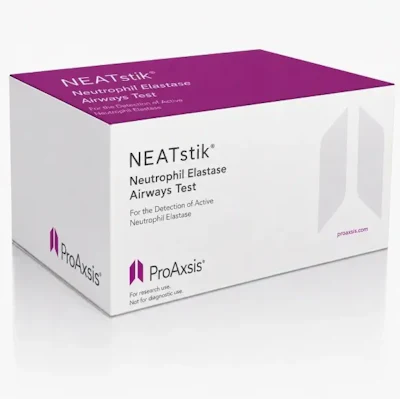
The study is being conducted by ProAxsis, manufacturer of the testing tool, in conjunction with Imperial College London. The ongoing, 21-month clinical research study will evaluate the NEATstik, a lateral flow testing tool that uses proprietary ProteaseTag technology to detect active neutrophil elastase (NE) in sputum samples. Results are returned within 10 minutes, allowing for rapid and ongoing monitoring of active NE levels in a research setting.

NE is an established biomarker of bacterial infection and inflammation in the lungs and is associated with an increased risk of exacerbations and worsening disease severity in both bronchiectasis and COPD.
A previous study of the NEATstik, “A Point-of-Care Neutrophil Elastase Activity Assay Identifies Bronchiectasis Severity, Airway Infection and Risk of Exacerbation,” was published in the European Respiratory Journal.
That study tested 124 patients with stable bronchiectasis using the NEATstik, which scores NE concentration from zero to 10. The study found that the lateral flow device provides assessment of NE activity from sputum in minutes and identifies patients at increasing risk of airway infection and future exacerbations.
The study with Imperial College will provide an initial assessment of NEATstik’s diagnostic value within the COPD population.
Lydia Finney, PhD, clinical associate professor in respiratory medicine at Imperial College London said there is a growing need for faster diagnostic tools in the treatment of COPD.

“COPD affects millions of people worldwide,” she said. “New diagnostic tools are urgently needed to direct treatment and improve outcomes for people living with COPD.”
Louise Ryan Murphy, managing director of ProAxsis, said positive results from the trial could lead to more applications for the NEATstik in respiratory medicine.
“The aim [of the study] is not only to evaluate our NEATstik test in a disease that affects hundreds of millions of people worldwide, but also to explore broader applications for the technology across respiratory research, drug development and patient monitoring,” she said.
The results of the Imperial College study are expected to be released in early 2027.