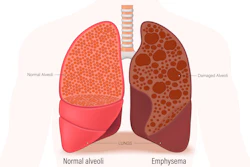
Lung volume reduction surgery (LVRS) is an effective treatment for patients with severe emphysema. And while a bilateral approach is favored over unilateral, very few studies have compared outcomes of sequential bilateral staged surgery and simultaneous bilateral surgery.

A study doing just that — “Evaluating the Effectiveness of Staged Versus Simultaneous Bilateral Lung Volume Reduction Surgery in Patients With Severe Emphysema” — was published in the Journal of Thoracic Disease.
According to a news release, the retrospective cohort study included patients with severe emphysema who underwent LVRS at two tertiary referral centers. The study included 81 patients, most of whom were males with a median age of 65. Most underwent simultaneous bilateral LVRS, while 21 had a staged approach.
The researchers determined that staged LVRS offered similar length of hospital stay, complication rates and improvements in pulmonary function as simultaneous LVRS. Where the two differed was that the staged approach showed a better composite outcome of overall survival and transplant-free survival compared to outcomes for the simultaneous bilateral approach.
A staged approach may offer survival benefits and allow patients to delay the need for a lung transplant longer compared to the bilateral approach, the researchers wrote. In addition, since video-assisted thoracoscopic surgery has replaced sternotomy as the standard for LVRS, the researchers said there is no need to perform a bilateral operation when morbidity and length of stay are similar for staged unilateral operations.
Researchers concluded that the study casts doubt on whether bilateral LVRS should be the default operation going forward.