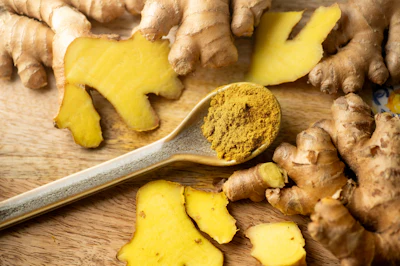
Researchers at N.C. A&T and Columbia University are conducting a three-year, $1.6 million study funded by the National Institutes of Health (NIH) to determine whether ginger can effectively treat asthma by improving airway function and reducing inflammation. Previous research showed that ginger was safe and associated with improvements in asthma symptoms and inflammatory markers.
- $1.6 million NIH grant supports three-year study on ginger as asthma therapy at N.C. A&T and Columbia University
- Research will measure airway response to methacholine, monitor symptoms and evaluate inflammatory markers including nitric oxide and immune cells
- Earlier study showed ginger was safe and associated with improvements in asthma symptoms and inflammatory biomarkers when patients took one gram twice daily
Researchers at North Carolina Agricultural and Technical State University (N.C. A&T) in Greensboro and Columbia University in New York are collaborating to launch a new three-year study investigating the impact ginger could have as a viable treatment for asthma. Their work is being supported by a $1.6 million grant from the National Institutes of Health (NIH).

The research aims to evaluate the spice’s impact on airway function, asthma symptoms and inflammation in patients with asthma. Investigators detailed the planned research in a N.C. A&T press release.
“Ginger has a long history of use as both a food and a traditional remedy, but rigorous clinical studies are needed to determine whether and how it can benefit people with asthma,” said Shengmin Sang, PhD, distinguished professor of functional foods and human health at N.C. A&T’s Center for Excellence in Post-Harvest Technologies. “Our goal is to connect the chemistry of ginger with what happens in the human body and ultimately determine whether these findings can be translated into practical approaches to improve health.”
The study will measure how patients’ airways respond to methacholine, a substance commonly used to assess airway sensitivity. They will also monitor symptoms, evaluate inflammatory markers such as nitric oxide and immune cells, track fatty acids associated with inflammation and examine how the body absorbs and metabolizes compounds found in ginger.
The new trial will build upon promising results from an earlier study in which asthma patients received either one gram of ginger or a placebo twice daily. Researchers reported that the ginger regimen from that earlier study was safe and was associated with improvements in asthma symptoms and inflammatory biomarkers. The study also confirmed that bioactive compounds in ginger were absorbed into the bloodstream.

As part of the project, Dr. Sang’s laboratory will receive more than $284,000 to analyze ginger supplements used in the trial, identify active compounds, measure their absorption into the bloodstream and evaluate how the body processes them. These findings, he said, will help determine whether larger-scale clinical trials are warranted.
According to Dr. Sang, this trial represents the latest step in more than two decades of ginger-related studies he has conducted and extends a collaboration with Columbia University that has been ongoing since 2018. He said their work aligns with a broader effort to explore “food as medicine” approaches that may complement traditional treatments and support disease prevention and management.