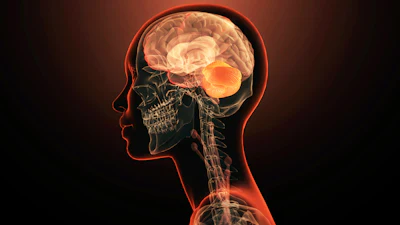
New research presented at the European Respiratory Society Congress 2026 shows that severe type 2 asthma is associated with measurable changes in brain structure, including differences in white matter and key brain regions like the hippocampus, suggesting that asthma's effects extend well beyond the lungs and may be linked to chronic inflammation.
- Severe asthma patients showed less white matter and structural differences in the hippocampus and temporal lobes compared to those with mild or controlled asthma.
- Higher levels of type 2 inflammation were associated with greater white matter changes, suggesting a link between chronic inflammation and brain structure alterations.
- Previous studies linked asthma to memory and cognition challenges, but this is among the first to demonstrate actual structural brain differences.
New research presented at the European Respiratory Society (ERS) Congress 2026 in Barcelona suggests the most severe forms of asthma may be associated with measurable changes in brain structure.
The yet unpublished research was outlined in the abstract, “Structural Brain Imaging in Biologic Naïve T2-High Severe Asthma, Baseline Data From the CONTENTed Study.” Investigators from the National Institute for Health and Care Research (NIHR) Biomedical Research Centre: Bristol and City St George’s, University of London, examined 50 patients with severe type 2 asthma and compared them with 25 patients whose asthma was under control. They found that people with severe type 2 asthma exhibited differences in both brain volume and the organization of white matter compared with individuals whose asthma was mild, moderate or well controlled.

Study participants underwent advanced MRI scans using a technique known as quasi-diffusion imaging (QDI), which provides detailed insights into the brain’s white matter pathways, the networks responsible for communication between different brain regions.
In addition to having less white matter, patients with severe asthma had differences in key brain structures, including the hippocampus and temporal lobes. Scientists also observed that higher levels of type 2 inflammation were associated with greater white matter changes, suggesting a potential link between chronic inflammation and alterations in brain structure, investigators noted.
“Asthma is usually thought of as a disease of the lungs, but growing evidence suggests its effects may extend well beyond the airways,” said presenter George Nava, BA, MBBS, an NIHR academic clinical lecturer in the Bristol Academic Respiratory Unit, U.K. “We wanted to investigate whether people with severe type 2 asthma show more differences in brain structure compared to those whose asthma is well controlled.”

According to researchers, the results highlight growing awareness that severe asthma can affect other aspects of health beyond breathing difficulties. They noted that previous studies have linked asthma to challenges involving memory, cognition and overall wellbeing, but this study is among the first to show structural brain differences associated with the chronic condition.
Researchers said they are now investigating whether the observed brain changes can be prevented, reduced or reversed through newer therapies that specifically target the inflammation responsible for severe type 2 asthma. Investigators said one of the most important next steps is understanding whether treatment can reverse these neurological changes.