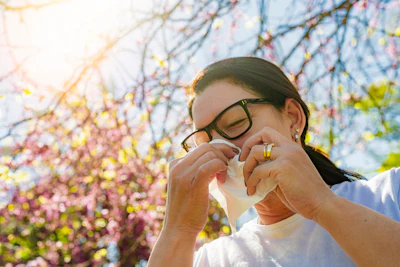
Allergy season can be a difficult time for those who are allergic to pollen. For people whose lung health is compromised by COPD, it can be even worse. Though the effects of things like air pollution on COPD are well studied, what is less understood is the effect of aeroallergens such as pollen on the respiratory health of people with COPD.

A paper, “Association of Short-Term Pollen Exposure With Lung Function in COPD Patients,” sought to investigate that link. The paper was published in Chronic Obstructive Pulmonary Diseases: Journal of the COPD Foundation.
According to the paper, most research on the respiratory effects of pollen exposure has centered around allergic rhinitis or asthma. And while pollen is a known trigger for asthma, a notable number of COPD patients also exhibit allergic sensitization or atopy. While some studies have examined the link between aeroallergen exposure and increased COPD hospitalization, few studies have examined objective lung function as a measure of airway response to pollen exposure in COPD.
The study population was comprised of 30 participants diagnosed with COPD who were also former smokers recruited from Beth Israel Deaconess Medical Center in Boston, Massachusetts. Upon entry into the study, researchers collected baseline demographic data from each patient in addition to initial measures of lung function. The participants were then observed for up to four nonconsecutive 30-day periods distributed across four different seasons over a 12-motnh period. The participants also performed daily lung function measurements each morning, prior to taking any medications or inhalers, using a portable spirometer.

Total pollen count was obtained as a regional daily average from Asthma and Allergy Affiliates, Inc., of Salem, Massachusetts. Median exposure to pollen among the participants was 32.4 grains/m3. The researchers found that higher short-term pollen exposure (generally in the three days leading up to lung testing) was associated with a lower forced expiratory volume in one second (FEV1).
They concluded that the finding suggests that pollen may impair expiratory airflow in patients with COPD, with a possible cumulative effect that takes more than a day to develop. Lung function was worse in those who had both COPD and asthma.
“We found that not only does pollen exposure have a negative impact on lung function, but when combined with air pollution, the negative effects are even stronger,” said senior author Mary Rice, MD, of Harvard T.H. Chan School of Public Health, in a press release. “On high pollen days, people with COPD can reduce their exposure by watching their pollen forecasts, staying indoors and using an air purifier.”