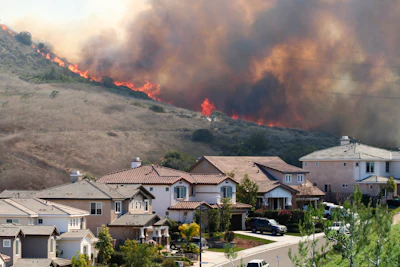
Wildfire smoke can trigger breathing problems and flareups in patients with COPD, but many of them are not receiving the information they need regarding these risks to help them stay safe.
That’s according to the paper, “Understanding COPD Patients’ Perspectives on Utilizing Strategies to Limit Their Exposure to Wildfire Smoke,” published in Chronic Obstructive Pulmonary Diseases: The Journal of the COPD Foundation.

Wildfire smoke is a leading cause of pollution and is especially dangerous for patients with COPD, often triggering breathing difficulties and exacerbations. For the study, researchers interviewed people living with COPD who were members of Kaiser Permanente Northern California and lived near significant wildfire events in the past. The idea was to explore their understanding of wildfire smoke, protective behaviors and information sources, authors said.
The researchers developed an interview guide with three sections:
- Relationship and understanding of wildfire smoke
- Use of strategies for protecting one’s health from smoke
- Experience with prescribed burns (controlled fires intentionally set to manage a particular area)
Participants in the study were identified using electronic health record data as those who had been diagnosed with COPD during either at least one hospitalization or at least two outpatient encounters. They also had to be at least 65 years old.
The researchers wrote that the rationale for an older age group was to enrich the likelihood of those with COPD (as opposed to asthma) and to have a group with enough lived experience over time with smoke from any source. They ultimately narrowed it down to 6,338 eligible participants, reaching out to 2,112 of those. Only 107 people said they were interested and a final count of 31 interviews were conducted.
The study found patients tended to get information about poor air quality from the internet and smartphone apps rather than clinical interactions but also said they would be open to receiving the information from clinicians.

The top reasons given for not going outside included smell or sight of smoke or an alert from a local health or governmental agency. There were some barriers to their usage of mitigation strategies including education and a lack of equipment like air cleaners and masks.
Some respondents simply chose not to use any of the mitigation strategies while others reported a negative association (e.g., masks are uncomfortable or reminded them of the COVID-19 pandemic).
Many of the participants had not had conversations with their doctors about how air quality negatively affects their health and lacked knowledge about mitigation strategies like indoor air purifiers or the air recirculation button in their vehicles. Most said they preferred real-time guidance from their healthcare team when air quality becomes a health risk.
“Some patients are already monitoring air quality, but not all,” said senior author Laura Myers, MD, MPH, of Kaiser Permanente Northern California in a press release. “We need to make sure that people with COPD receive accurate, actionable guidance from trusted sources in real time so they can take actions to protect themselves. Patient-centered approaches to wildfire preparedness can help the most vulnerable people prepare for and respond to air quality events before their symptoms get worse.”