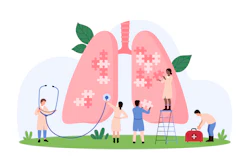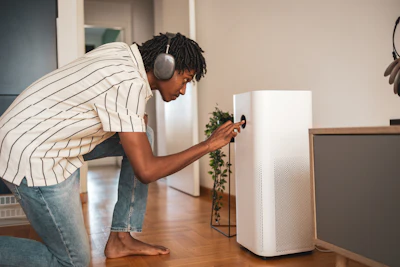
High-efficiency particulate air (HEPA) filters may not be enough to protect home dwellers from asthma symptoms and exacerbations. That’s according to the paper, “The Association Between High-Efficiency Particulate Air (HEPA) Filter Usage and Asthma Outcomes in a High Atmospheric Dust Environment: A Cross-Sectional Analysis,” recently published in Cureus.

Although the home devices may offer modest symptom relief, they do not significantly improve overall asthma control when used on their own, the study concluded. Investigators made that determination after evaluating 118 individuals with clinically diagnosed asthma over a six-month period in 2024. Participants were divided into two groups: 48 HEPA filter users and 70 individuals who did not use any air purification systems.
The study’s authors noted that although HEPA filters are widely recommended for improving indoor air quality — and are capable of removing up to 99.97% of airborne particles as small as 0.3 microns — the results indicated no statistically significant differences in asthma control between users and nonusers.
Researchers used standardized tools, including the Asthma Control Test (ACT) and Asthma Control Questionnaire (ACQ), to evaluate outcomes such as nighttime awakenings, morning symptom severity, wheezing, shortness of breath and reliance on rescue inhalers.
HEPA users did experience slight improvements in some areas, researchers determined. For example:
- 37.3% of HEPA users reported no morning symptoms, compared to 17.0% of nonusers
- 45.1% of HEPA users experienced minimal nighttime disturbances versus 19.7% among nonusers
However, these differences did not reach statistical significance, meaning they could not be confidently attributed to HEPA filter use rather than chance, the authors noted.
There was some promising news. The study did reveal that individuals who had used HEPA filters for more than one year reported subjective improvements, particularly in reducing nighttime symptoms. Long-term users described up to a 50% reduction in nighttime disturbances compared to short-term users.

Still, these findings were also not statistically significant. Researchers underscored the need for further research with larger sample sizes and longer observation periods
Study investigators emphasized that although HEPA filtration may help reduce indoor airborne irritants — such as dust, pet dander and mold spores — it is unlikely to provide sufficient asthma control as a standalone intervention.
They recommend combining air filtration with other environmental strategies, including:
- Improved ventilation to increase airflow and reduce pollutant concentration
- Humidity control to prevent mold and dust mite growth
- Allergen reduction through cleaning and minimizing triggers
- Adherence to prescribed medications, such as bronchodilators and corticosteroids
Although medications remain the cornerstone of asthma treatment, the study’s authors noted growing interest in nonpharmacological approaches, such as air purification. However, the study highlights the need for caution when relying solely on such methods.
Researchers acknowledged several study limitations, including a relatively small sample size and reliance on self-reported data, which may introduce bias. Additionally, the cross-sectional design does not establish cause-and-effect relationships.
The study’s authors noted their intent to conduct future studies to incorporate objective measurements of indoor air quality and explore the combined effects of multiple environmental interventions.