A newly developed deep learning-based imaging framework may improve the identification of asthma–COPD overlap (ACO), a complex respiratory condition that lacks universally accepted diagnostic criteria and is often difficult to distinguish from asthma or COPD alone.

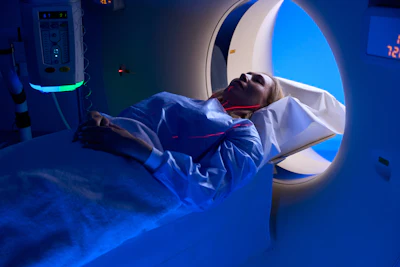
In the single‑center, proof‑of‑concept paper, “Accurate Asthma–COPD Overlap Classification via Deep Transfer Learning in Medical Image Segmentation,” investigators applied deep transfer learning to chest computed tomography (CT) images to support imaging‑assisted classification of asthma, COPD and ACO. The approach used a convolutional neural network-based segmentation pipeline to extract anatomical features from lung CT scans and assess their potential value in phenotypic differentiation. The paper was published in the International Journal of Chronic Obstructive Pulmonary Disease.
According to the results, the model achieved an ACO classification accuracy of 93.21%, outperforming two comparator methods, NUS‑PSL and PRE‑1000C, which achieved accuracies of 85.43% and 86.92%, respectively. Researchers evaluated segmentation performance against expert‑annotated reference masks using the Dice similarity coefficient and observed higher accuracy lung parenchyma than for airway structures. This is consistent with known challenges in airway boundary detection on CT imaging, researchers noted.
The study cohort included 200 patients with asthma, COPD or ACO, who underwent routine chest CT imaging as part of clinical care. In addition to imaging analysis, researchers summarized lung function parameters, inflammatory biomarkers and symptom scores (ACT and CAT) to characterize patient profiles. These clinical variables were used for interpretation only and were not predicted by the deep learning model.

The study’s authors emphasized that CT imaging alone is insufficient for definitive diagnosis of ACO, which remains primarily defined by clinical history, spirometry, bronchodilator responsiveness and inflammatory markers. Instead, they said the proposed framework is intended as a complementary analytical tool, providing structural insights into airway remodeling and parenchymal changes that may differ across obstructive airway phenotypes.
By leveraging transfer learning with a pretrained ResNet‑50 backbone and a U‑Net-like segmentation architecture, researchers said the model was able to perform effectively despite limited labeled medical imaging data — a common challenge in clinical deep learning development
Although the results suggest potential clinical utility, the researchers cautioned that the findings were limited to internal validation in a single center. They noted they did not perform external validation or robustness testing across institutions, scanners or imaging protocols. As such, the authors stressed that multicenter studies and independent external validation were required before conclusions can be drawn about generalizability or clinical deployment.

According to researchers, the study adds to growing interest in deep learning‑assisted phenotyping of complex respiratory diseases and highlights how medical image segmentation, when integrated with established clinical assessment, may support more precise classification and risk stratification in asthma–COPD overlap.