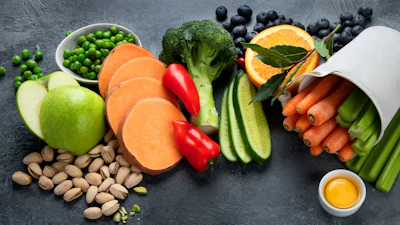
Eating colorful fruits and vegetables rich in carotenoids can significantly reduce inflammation and exacerbations in people with COPD, with research showing a 50% lower risk of severe exacerbations for every point increase in carotenoid levels.
- Carotenoid benefits: Higher carotenoid levels were associated with lower COPD Assessment Test scores and better respiratory health across multiple measures
- Exacerbation reduction: Each one-point increase in total carotenoid levels resulted in a 50% lower incidence of severe exacerbations
- Study population: Research included 98 low-income individuals with moderate-to-severe COPD in the Baltimore-Washington area, mean age 66.4 years
- Key finding: Greater total carotenoid levels were linked to lower symptom scores on CAT, SGRQ, and CCQ tests plus improved cough impact scores
- Source foods: Red, yellow, and orange fruits and vegetables are primary dietary sources of protective carotenoids
Eating a diet rich in red, yellow and orange fruits and vegetables may help reduce inflammation and exacerbations associated with COPD.
That’s according to a paper, “Protective Effects of Serum Carotenoid Status on Respiratory Health Among Low-Income Individuals With COPD,” published in Chronic Obstructive Pulmonary Diseases: Journal of the COPD Foundation.

The study used data from the “Comparing Urban and Rural Effects of Poverty on COPD (CURE COPD)” study to investigate an at-risk population of low-income individuals with COPD and determine if serum carotenoid levels are associated with respiratory symptoms and health status as well as markers of inflammation and oxidative stress. The CURE COPD study originally examined how respiratory outcomes of low-income people with COPD in the Baltimore, Maryland, area were impacted by nutrition and air pollution.
For the new study, researchers compared 10 carotenoid biomarkers with participants’ scores on the COPD Assessment Test (CAT), the St. George’s Respiratory Questionnaire (SGRQ) and the Clinical COPD Questionnaire (CCQ). Eligible participants were aged 40 years or older, had physician-diagnosed moderate-to-severe COPD, were former smokers with more than a 10 pack per year exposure and met the poverty indicator of residing in low-income communities of Baltimore and the greater Baltimore-Washington, D.C., metropolitan area.
Ninety-eight people were ultimately included in the study with a mean age of 66.4 years. The majority (55.5%) were female and nonwhite (58.4%). Half of the participants had completed college education and about two-thirds (66.3%) had a household income of less than $30,000.

Researchers found that greater total carotenoid levels were associated with lower scores across all COPD assessment tests and a better cough impact score. For every one point higher total carotenoid level, there was a 0.83-point lower CAT score, a 1.40-point lower SGRQ score, a 0.13-point lower CCQ score and a 2.69-point higher cough impact score.
In addition, researchers said greater total carotenoid levels were associated with a decreased risk of severe exacerbation frequency, with a 50% lower incidence for every one-point increase in total carotenoid levels.
Nadia Hansel, MD, MPH, researcher with Johns Hopkins University in Baltimore and senior author of the study, said in a press release that this research continues to demonstrate the benefits of nutrient-rich diets for people with COPD.
“Our study adds to the growing body of evidence that diet plays an important role in reducing systemic inflammation,” she said. “Additional research is necessary to further show how nutritional approaches to care and access to healthy foods can improve quality of life for people living with COPD.”