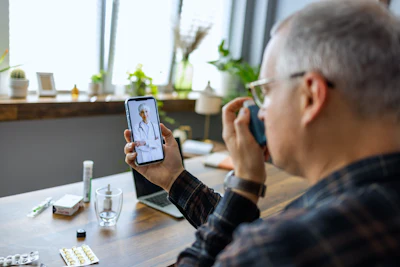
For COPD patients struggling to use their inhalers, help is just a phone call away. Researchers from Humana Healthcare Research and University of Chicago Medicine found that patients with COPD who participated in a study involving training via telephone used their inhalers more efficiently.

The paper, “Phone-Based Teach-to-Goal Inhaler Education Program for Medicare Advantage Beneficiaries With COPD,” was published in Chronic Obstructive Pulmonary Diseases: Journal of the COPD Foundation.
Researchers used a value-based insurance design program developed by Humana comprised of a medication management program that included a phone-based adaptation of the teach-to-goal (TTG) inhaler education approach. The TTG method involved the patient demonstrating their inhaler use, followed by the educator correcting their technique through rounds of demonstration and verbal instruction. The patient then “teaches” the technique back to the educator until it is performed correctly.
Enrollees in the program received up to three phone calls from Humana pharmacists for medication management. On the first call, the pharmacist checked eligibility, explained the program and assessed the enrollee’s overall treatment plan. If the enrollee had access to their inhaler, TTG education began at that time. Otherwise, a follow-up call was scheduled to administer the first educational session.
Of more than 1,800 eligible participants, 68% were targeted for enrollment in the program, while 32% self-enrolled. Nearly 40% were using their inhalers incorrectly at the start of the program, but that number dropped to less than 7% after the first phone education session.

Positive outcomes were observed across all types of inhaler devices and patient subgroups with ongoing, multisession education playing a key role in helping patients maintain correct inhaler use over time, according to a press release.
“Using a COPD inhaler can be challenging because it requires precise timing and coordination as well as understanding the correct steps to ensure the medication is delivered effectively to the lungs,” said Emily Thomas, PharmD, a Humana pharmacist and program leader. “A phone-based education offers a convenient way for patients to receive personalized guidance and support, helping them improve their inhaler technique and better manage their condition.”
“When used correctly, respiratory inhalers deliver the cornerstone of treatments to prevent and reduce COPD symptoms,” said Valerie Press, MD, MPH, UChicago Medicine physician and researcher. “However, inhaler misuse is pervasive. Guidelines recommend inhaler technique assessment and teaching at all health care encounters to mitigate this misuse. This insurance-based program extends the reach of this critical education to provide necessary medication education.”